In brief
Cardinal David, newly designated as a cardinal and an advocate for the marginalized, prepares to vote in the conclave. His dedication to addressing social injustices and maintaining a moral voice amid political turbulence reflects the evolving role of the Catholic Church in the Philippines.
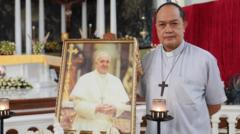
Not even in his wildest imagination did Cardinal Pablo Virgilio David think that one day he would be part of a conclave, but that reality is now upon him. Appointed by Pope Francis, David is among three cardinals representing the Philippines, and he stands ready to help choose the next pope. Speaking from his cathedral in Caloocan, on the outskirts of Manila, he shared, "I am just a humble bishop serving a diocese with a community primarily composed of slum dwellers."Despite holding this position for only five months, David embodies the late Pope's vision for a Catholic Church that reconnects with everyday followers. His commitment to advocating for the poor and marginalized people syncs perfectly with Pope Francis' agenda to make the church more accessible and aligned with the realities of Filipino life.The Philippines harbors the largest Roman Catholic population in Asia, with nearly 80% of its 100 million citizens practicing the faith. Cardinal Luis Antonio Tagle, another Filipino cardinal, is also considered a potential candidate for the papacy, reflecting the continued significance of the Philippines within the global Catholic community.However, the church faces critical challenges as political pressures mount. With the rise of charismatic groups and challenges to traditional doctrines, particularly regarding divorce and family planning, the Catholic Church in the Philippines is navigating a turbulent landscape. Cardinal David, during his tenure, has been a vocal critic of former President Duterte's controversial war on drugs, which has taken a massive toll on communities. He dedicated a plaque at his cathedral in memory of Kian Delos Santos, a 17-year-old victim of police violence during this brutal campaign."I saw too many bodies on the street," Cardinal David reflected. His response to violence included providing sanctuary to the vulnerable and initiating drug rehabilitation programs. As he challenged the moral implications of the drug war, he also received threats, facing accusations from Duterte himself. Still, his efforts were supported by Pope Francis, who in 2019 assured him of his safety, further strengthening his resolve against injustice.Throughout its 500-year history, the role of the Catholic Church in the Philippines has shifted significantly. Once an ally of colonial powers, the church now grapples with diminishing influence, partly due to its rigid stances on social issues. The legacy of liberation theology has inspired clergymen like David to actively engage in social justice, particularly in the wake of political turmoil.Church leaders in the modern era have often found themselves disconnected from the very populace they serve, raising questions about the institution's future. With mass attendance declining sharply and increased criticisms surrounding moral credibility due to past scandals, the church is in a crucial period of reevaluation.Cardinal David advocates for humility and openness within the church, believing it’s essential to confront criticisms rather than retreating defensively. “Dare to be vulnerable and show humanity," he emphasized, echoing Pope Francis' guidance that the church needs to evolve to remain relevant.As the conclave approaches, Cardinal David's journey represents both a challenge and an opportunity for the Catholic Church in the Philippines—a chance to redefine its role in the societal landscape, address the needs of the marginalized, and rejuvenate its moral authority in a rapidly changing world.