In brief
Mountains of ice are vanishing at unprecedented rates, underscoring the urgent need for climate action.
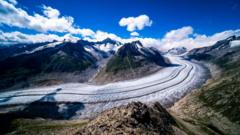
As temperatures climb, glaciers around the world are disappearing faster than ever before, according to a groundbreaking study published in the journal Nature. Compiling data from 230 estimates by 35 international research teams, scientists reveal that glaciers have lost over 6,500 billion tons of ice—equivalent to 5% of their volume—since the start of the 21st century. The loss has accelerated, with global glacier reductions about one-third greater in the past decade compared to the period between 2000 and 2011.Glaciers are crucial for millions, acting as freshwater sources. They store enough water to potentially elevate sea levels by 32cm (13 inches) if they were to melt entirely. Since the turn of the century, non-polar glaciers alone have shed an average of 270 billion tons of ice annually, which Zemp compares to the water needs of the entire global population for 30 years. Central Europe has been particularly hard hit, losing about 39% of its glacier ice over the past two decades.The study emphasizes the methodology of combining various scientific approaches, from direct field measurements to satellite data, to garner more accurate insights into glacier dynamics. Prof. Andy Shepherd noted that this added credibility can bolster confidence in findings that inform climate policy and industry practices, especially as glaciers exhibit delayed responses to climate change.Despite the alarming trends, the speed at which glaciers will continue to melt varies based on future global warming. The rate of ice loss by the century's end could range from 25% to nearly 50%, depending on humanity's success in curbing greenhouse gas emissions. Every fraction of a degree of warming averted could spare glaciers and mitigate associated damages.On a larger scale, the erosion of glacier ice not only affects local ecosystems but also has serious ramifications for global populations. Hundreds of millions rely on glacial meltwater during dry seasons, and glacier loss threatens water security in many regions. Additionally, sea level rises stemming from melting ice could expose millions more to the dangers of coastal flooding—a reality that has intensified in recent decades, with global sea levels already rising by more than 20cm (8 inches) since 1900.As glaciers continue to fade, the clock is ticking for decisive climate action, underscoring the urgency for collective efforts to combat the impending crisis. The interconnected web of climate impacts illustrates that what occurs on glaciers reverberates across the globe, reaffirming the critical need to address climate change head-on.