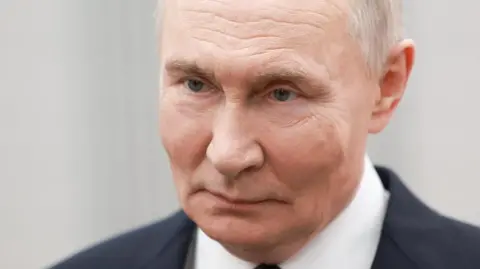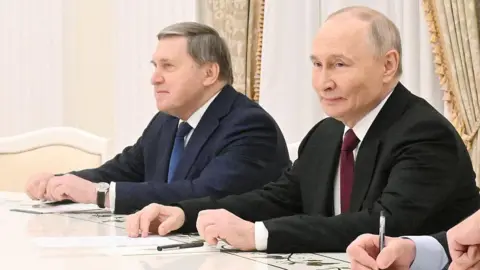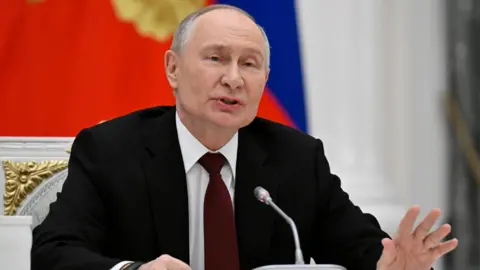
In recent remarks, Vladimir Putin has floated the controversial idea of a United Nations-led government in Ukraine to facilitate what he termed more "competent" elections. This proposition intensifies his challenge to the authority of Ukraine's current leadership under President Volodymyr Zelensky, raising suspicions regarding Russia's motivations amid a lengthy and brutal conflict.
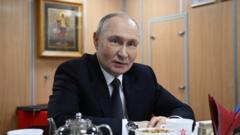
Responding to the ongoing hostilities that have engulfed Ukraine for nearly four years, Putin's suggestion seeks to establish a temporary UN-controlled administration tasked with organizing elections that would reportedly bring forth a government “trusted by the people.” During an address to submarine crew members in Murmansk, he indicated that such discussions would involve not only the United States and European allies but also Russia’s “partners and friends.”
Following Putin's comments, Ukraine swiftly denounced the proposal as a "crazy" tactic aimed at delaying peace negotiations, a sentiment echoed by officials in Washington, who asserted that the governance of Ukraine is a matter for its constitution and citizens to decide. This comes in context of a recent limited truce in the Black Sea area, signaling potential for ceasefire talks, albeit with significant Russian conditions attached.
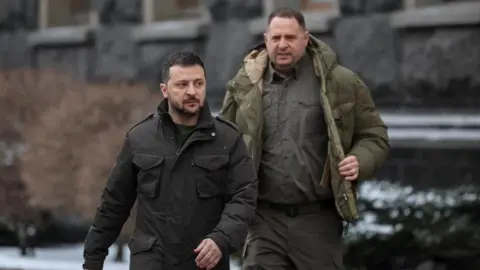
Putin’s narrative posits Kyiv’s current leadership as illegitimate, aiming to undermine Zelensky’s position, who is perceived as having overstayed his term due to ongoing martial law and war-induced chaos. Analysts suggest that by creating a narrative of illegitimacy around Zelensky, the Russian leader hopes to destabilize Ukraine's governance further while potentially regrouping military efforts.
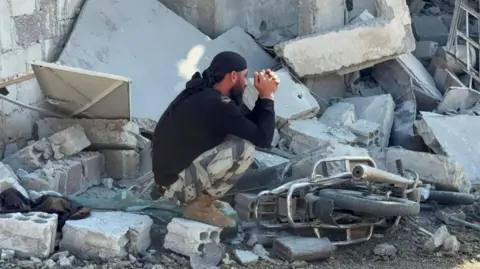
Amid ongoing accusations of continued violence and strikes on infrastructure, both Ukrainian and Russian officials are engaged in a war of narratives, where each side contests the validity and tactics of the other. Zelensky’s staff accused Russia of attempting to prolong conflict instead of moving towards peace, underlining the tensions that complicate the already fraught landscape of international diplomacy surrounding Ukraine.
Putin’s reminder of international precedents for UN oversight raises complex questions regarding sovereignty and global governance. However, the sluggish pace of territorial gains on the battlefield casts doubt on Moscow's claims of having the "strategic initiative," further pointing to an entrenched stalemate.
As the situation develops, European leaders, including French President Emmanuel Macron, are deliberating on plans to reassure Ukraine amidst its struggles, signaling continued international efforts to stabilize the region. With ongoing discussions and skirmishes, the pathway to peace remains uncertain, leaving Ukraine's fate hanging in a delicate balance.
Responding to the ongoing hostilities that have engulfed Ukraine for nearly four years, Putin's suggestion seeks to establish a temporary UN-controlled administration tasked with organizing elections that would reportedly bring forth a government “trusted by the people.” During an address to submarine crew members in Murmansk, he indicated that such discussions would involve not only the United States and European allies but also Russia’s “partners and friends.”
Following Putin's comments, Ukraine swiftly denounced the proposal as a "crazy" tactic aimed at delaying peace negotiations, a sentiment echoed by officials in Washington, who asserted that the governance of Ukraine is a matter for its constitution and citizens to decide. This comes in context of a recent limited truce in the Black Sea area, signaling potential for ceasefire talks, albeit with significant Russian conditions attached.
Putin’s narrative posits Kyiv’s current leadership as illegitimate, aiming to undermine Zelensky’s position, who is perceived as having overstayed his term due to ongoing martial law and war-induced chaos. Analysts suggest that by creating a narrative of illegitimacy around Zelensky, the Russian leader hopes to destabilize Ukraine's governance further while potentially regrouping military efforts.
Amid ongoing accusations of continued violence and strikes on infrastructure, both Ukrainian and Russian officials are engaged in a war of narratives, where each side contests the validity and tactics of the other. Zelensky’s staff accused Russia of attempting to prolong conflict instead of moving towards peace, underlining the tensions that complicate the already fraught landscape of international diplomacy surrounding Ukraine.
Putin’s reminder of international precedents for UN oversight raises complex questions regarding sovereignty and global governance. However, the sluggish pace of territorial gains on the battlefield casts doubt on Moscow's claims of having the "strategic initiative," further pointing to an entrenched stalemate.
As the situation develops, European leaders, including French President Emmanuel Macron, are deliberating on plans to reassure Ukraine amidst its struggles, signaling continued international efforts to stabilize the region. With ongoing discussions and skirmishes, the pathway to peace remains uncertain, leaving Ukraine's fate hanging in a delicate balance.