Trains no longer run to Ukraine's eastern Donetsk region - part of the Donbas claimed in its entirety by Russia's President Vladimir Putin. It's another sign of the steady Russian advance.
Instead, the last station is now on the western side of the Donetsk border. This is where civilians and soldiers wait for a ride towards relative safety - their train to get out of Dodge.
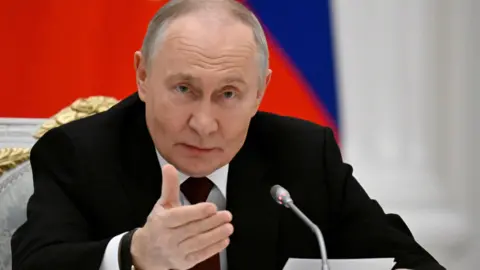
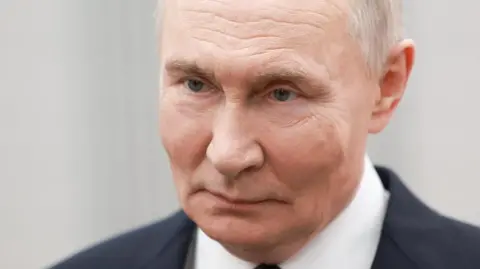
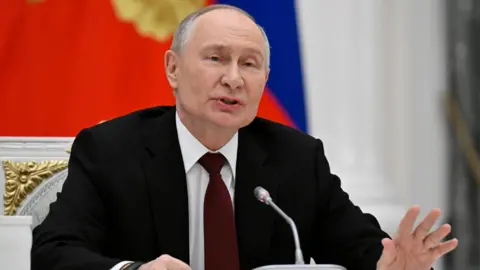
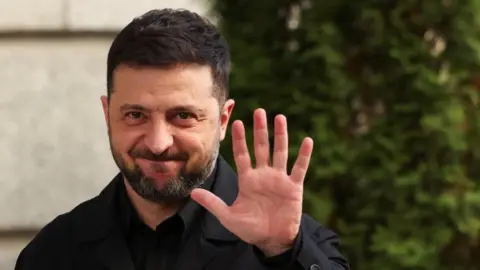
Putin has been sounding more bullish since the leak of US proposals to end the war, widely seen as being in tune with his maximalist demands. Ukraine's President Volodymyr Zelensky says territory remains the most difficult issue facing US-led peace talks.
At the last station on the line, soldier Andrii and his girlfriend Polina are parting after an all-too-brief time together. Andrii has to return to the front and they don't know when they'll see each other again.
He laughs when I mention peace talks, which have seen Donald Trump's envoys speak to Ukrainian negotiators before heading to Moscow, and dismisses them as 'chatter, just chatter'. He doesn't think the war will be over soon.
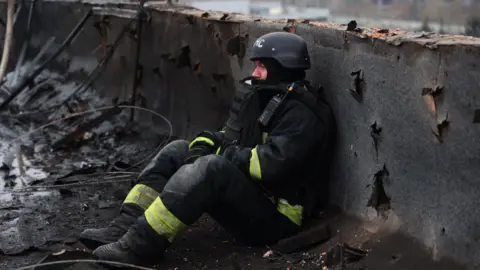
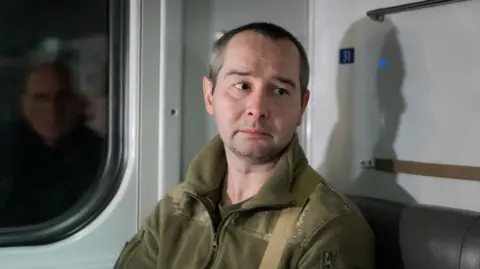
There is scepticism, too, among other soldiers who board the train west for a brief respite from the fighting. They are taking some of their 20 days of leave. Most look exhausted.
Russian forces now control some 85% of the Donbas, made up of Luhansk and Donetsk. On Tuesday they claimed to have captured the key strategic town of Pokrovsk in Donetsk. Ukraine said fighting was continuing in the city.
Denys, who has been serving in the Ukrainian army for the past two years, tells me 'everyone's drained, everyone's tired mentally and physically'.
Some of his comrades have already fallen asleep. His unit has been fighting in the besieged city of Kostyantynivka.
'It's scary, really scary,' he says, describing drones flying around 'like flies'. But he makes it clear they are not ready to give up after sacrificing so much.
'Nobody will give Putin the Donbas. No way, it's our land,' he says.
Ceding territory where at least a quarter of a million Ukrainians live - the Donetsk 'fortress belt' cities of Slovyansk, Kramatorsk and Druzhkivka - will not be acceptable to most Ukrainians.
It's clear that as peace talks continue, an exodus of civilians is ongoing, with a continuous flow of people arriving at reception centers just over the border.
Families like Yevheniy and Maryna's have fled Kramatorsk because of increasing danger, while others, like Oleksandr, consider peace a priority even if it means losing their homes. The sigh of doubt remains, however, shared by both civilians and soldiers who feel the weight of warfare pressing down on them.