In brief
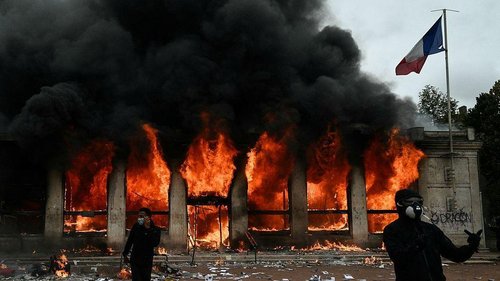
As protests in Tbilisi escalate, Georgian citizens are marking a pivotal moment in their country's quest for alignment with Europe, fighting against what they perceive as a regression towards Russian influence. Over several nights, thousands of demonstrators clad in European Union flags have gathered outside the parliament, condemning the ruling Georgian Dream party’s abandonment of its pro-Western commitments. The conflict not only represents a struggle for democratic values but also involves intense clashes between protestors and police, which have resulted in numerous injuries and heightened tensions.
The protests, now a significant national movement, have raised serious questions about the legitimacy of the government following controversial elections marred by alleged violations. In a country of 3.7 million, the situation is precarious, with opposition leaders warning that the future of Georgia hinges on whether the government is willing to engage with the European Union or revert back to a Russian sphere of influence. Despite the harsh crackdown by law enforcement and accusations of brutality, protesters remain determined to call for fresh elections and uphold their vision for a European Ukraine-style revolution. Their demands echo throughout Tbilisi and beyond, as citizens rally for their country’s future. Amid this critical juncture, Georgia's relationship with the West, particularly the EU and US, is being tested, threatening the stability of the region as both rulers and citizens grapple with their collective identity against the looming presence of Russia. The outcome of these protests could redefine Georgia’s political landscape and its ties with Europe for years to come. The ongoing protests signal a volatile crossroads for Georgia, as citizens navigate the treacherous waters of political legitimacy, authoritarianism, and regional influence, all while holding fast to their aspirations for a European future.