Warning: This article contains graphic descriptions of death and injury.
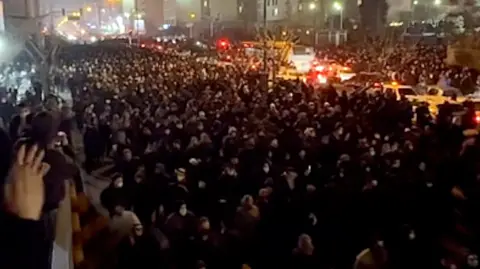
Following a protest in Tehran on January 8, Reza, a grieving husband, recounted the harrowing moment when he tried to shield his wife, Maryam, from gunfire. Suddenly, I felt my arm go light – there was only her jacket in my hands, he shared, devastated by her sudden death from a gunshot wound. For an hour and a half, he carried her body, emotionally exhausted until local residents offered shelter and kindness in her last moments.
Days before her tragic death, Maryam spoke to her children about the risks of protesting, saying, My blood, and yours, is no more precious than anyone else's. Her story represents just one of thousands of similar tragedies occurring in Iran, where a violent crackdown on dissent has claimed the lives of many innocent individuals.
The Iranian Human Rights Activists News Agency (HRANA) confirmed that at least 2,400 protesters, including 12 children, have been killed in the ongoing unrest following significant economic hardship and political frustration. This staggering number is expected to rise as the government maintains an oppressive grip on information and conducts a near-total internet blackout.
Local reports indicate that security forces have significantly escalated their response, labeling many of the victims as rioters and justifying their violence. Despite the growing death toll, the authorities remain silent about the total fatalities, and independent verification of casualties is challenging due to restrictions on reporting.
The recent protests, ignited by the sharp decline of Iran's currency, have intensified demands for political reform and an end to the ruling regime. Eyewitness accounts paint a dire picture of violent clashes, with many reports citing security forces targeting protesters with lethal force.
Among the victims are young dreamers like Sorena Golgun, an 18-year-old university student, and Robina Aminian, a 23-year-old fashion design student with aspirations for a brighter future. Their families now face the sorrow of untimely loss, with calls for accountability and justice drowned out in the chaos.
As opposition grows and fear amongst citizens increases, it remains uncertain what the future holds for Iran and those who courageously fight for their rights. Different narratives from civilians reveal a collective apprehension of potential ramifications for remaining protesters, amplifying the already palpable tension.
In these uncertain times of grief and resistance, the stories of Maryam, Sorena, Robina, and countless others remind us of the dire human cost of such struggles, echoing a call for solidarity from around the globe.