The BBC has been given access to detention facilities on former United Arab Emirates military bases in Yemen, confirming long-standing allegations of a network of secret prisons run by the UAE and forces allied to it in Yemen's decade-long civil war. One former detainee told the BBC he had been beaten and sexually abused at one of the sites. We saw cells at two bases in the south of the country, including shipping containers with names - apparently of detainees - and dates scratched into the sides. The UAE did not respond to our request for comment, but has previously denied similar allegations. Until recently, the Yemeni government, which is backed by Saudi Arabia, was allied with the UAE against the Houthi rebel movement which controls north-west Yemen. However, the alliance has fractured, with the UAE forces pulling out of Yemen in early January and Yemeni government forces reclaiming territory from separatists backed by the UAE. This includes the port of Mukalla, where we landed in a Saudi military plane for the visit to former UAE military bases in the Al-Dhaba Oil Export Area. Journalists have faced severe restrictions in accessing Yemen, but the Yemeni government invited reporters to view the two sites, accompanied by Yemen's Information Minister Moammar al-Eryani. Our findings align with independent accounts gathered in previous reporting and separate interviews conducted in Yemen.
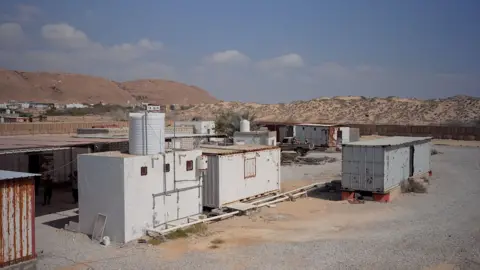
At one site, approximately ten shipping containers, painted black with little ventilation, were observed. Messages on the walls appeared to mark the dates detainees were brought in, some as recent as December 2025. Another military base exhibited eight cells, several measuring about one meter square and two meters tall, reportedly used for solitary confinement.
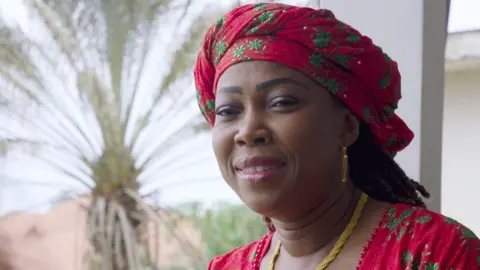
Human rights groups have long documented these facilities. Yemeni lawyer Huda al-Sarari has compiled numerous accounts from people claiming to have been held in Mukalla, attended a meeting with about 70 individuals, including families of another 30 individuals still in detention. They claim shipping containers could hold up to 60 men at a time, often blindfolded and bound, with no space to lie down. One survivor relayed his experience of being tortured for days to confess to being an al-Qaeda member.
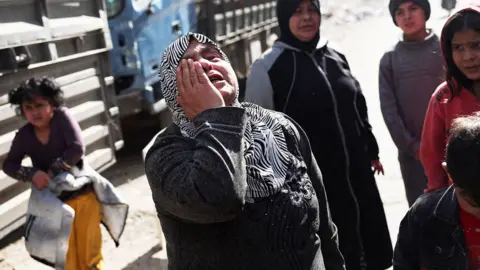
The detainees reportedly faced beatings, lack of proper food, and unsanitary conditions. Families are raising alarms about their loved ones, asserting that the Yemeni government must have had knowledge of these detention practices. Recently, on January 12, 2026, President Rashad al-Alimi called for the closure of all illegal prisons and the release of those held unlawfully. However, many families remain skeptical, fearing that detentions will persist despite a change in control. The terrorists are out on the streets. Our sons are not terrorists, lamented one mother. This escalating crisis raises critical concerns regarding human rights and the rule of law amidst Yemen's civil war.
At one site, approximately ten shipping containers, painted black with little ventilation, were observed. Messages on the walls appeared to mark the dates detainees were brought in, some as recent as December 2025. Another military base exhibited eight cells, several measuring about one meter square and two meters tall, reportedly used for solitary confinement.
Human rights groups have long documented these facilities. Yemeni lawyer Huda al-Sarari has compiled numerous accounts from people claiming to have been held in Mukalla, attended a meeting with about 70 individuals, including families of another 30 individuals still in detention. They claim shipping containers could hold up to 60 men at a time, often blindfolded and bound, with no space to lie down. One survivor relayed his experience of being tortured for days to confess to being an al-Qaeda member.
The detainees reportedly faced beatings, lack of proper food, and unsanitary conditions. Families are raising alarms about their loved ones, asserting that the Yemeni government must have had knowledge of these detention practices. Recently, on January 12, 2026, President Rashad al-Alimi called for the closure of all illegal prisons and the release of those held unlawfully. However, many families remain skeptical, fearing that detentions will persist despite a change in control. The terrorists are out on the streets. Our sons are not terrorists, lamented one mother. This escalating crisis raises critical concerns regarding human rights and the rule of law amidst Yemen's civil war.