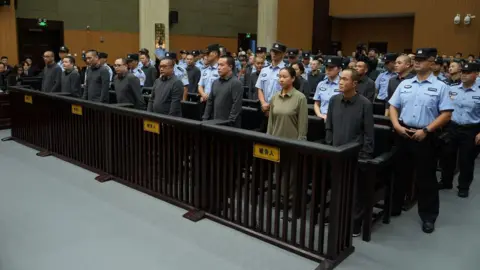
No-one should be surprised that China has swiftly executed the 11 members of an organized crime family from north-eastern Myanmar who were sentenced to death in September.
China executes more people than anywhere else in the world, according to human rights groups – the exact figure is a state secret. Officials are often executed for corruption, but the accusations against the Ming family were far more serious.
The Ming, Bau, Wei, and Liu clans have dominated the remote border town of Laukkaing in Myanmar's impoverished Shan state since 2009. They rose to power after General Min Aung Hlaing's military operation expelled an ethnic insurgent army, transitioning from traditional opium trade to a modern economy centered on casinos and online fraud.
However, the scam compounds operated by these families were notorious for brutality, capturing tens of thousands of Chinese workers under false promises and forcing them into fraudulent schemes. Complaints from victims and their families culminated in an increased outcry on social media, prompting Chinese authorities to act.
In a series of aggressive operations, a military-led offensive in Myanmar recaptured Laukkaing, resulting in the detainment of the crime family heads and turning over many to Chinese police. Notably, Ming Xuechang, the patriarch of the Ming family, allegedly took his own life following capture.
This crackdown on the Ming family reflects China's intensified efforts to combat organized crime, particularly as similar operations continue to evolve and shift locations.
China executes more people than anywhere else in the world, according to human rights groups – the exact figure is a state secret. Officials are often executed for corruption, but the accusations against the Ming family were far more serious.
The Ming, Bau, Wei, and Liu clans have dominated the remote border town of Laukkaing in Myanmar's impoverished Shan state since 2009. They rose to power after General Min Aung Hlaing's military operation expelled an ethnic insurgent army, transitioning from traditional opium trade to a modern economy centered on casinos and online fraud.
However, the scam compounds operated by these families were notorious for brutality, capturing tens of thousands of Chinese workers under false promises and forcing them into fraudulent schemes. Complaints from victims and their families culminated in an increased outcry on social media, prompting Chinese authorities to act.
In a series of aggressive operations, a military-led offensive in Myanmar recaptured Laukkaing, resulting in the detainment of the crime family heads and turning over many to Chinese police. Notably, Ming Xuechang, the patriarch of the Ming family, allegedly took his own life following capture.
This crackdown on the Ming family reflects China's intensified efforts to combat organized crime, particularly as similar operations continue to evolve and shift locations.