In brief
The Trump administration's decision to back Delcy Rodríguez, a loyalist to the Maduro regime, over opposition leader María Corina Machado reflects a strategic choice for stability instead of democratic ideals in Venezuela. Analysts warn of the implications, citing potential violence and challenges ahead in rebuilding the country, while Rodríguez's past and present roles signal a complicated path forward.
Amid the many questions swirling since last weekend's dramatic events in Caracas – and there are many – one that refuses to go away centres on the bespectacled woman now leading what US officials are calling Venezuela's interim authorities.
Why Delcy?
What is it about Delcy Rodríguez, daughter of a former Marxist guerilla and deputy to ousted dictator Nicolas Maduro, that has caught the eye of the Trump administration?
And why has Washington decided on an avowed Chavista revolutionary to stay in power, rather than backing the opposition leader, María Corina Machado, whose opposition movement is widely believed to have won the 2024 presidential elections?
The answer, according to one former US ambassador to Venezuela, is simple.
They've gone for stability over democracy, says Charles Shapiro, who served as George W Bush's ambassador in Caracas from 2002-04.
But the alternative, involving wholesale regime change and backing Machado's opposition movement, would have involved other dangers, including potential infighting among opposition figures and the alienation of those Venezuelans – perhaps as many as 30% – who voted for Maduro.
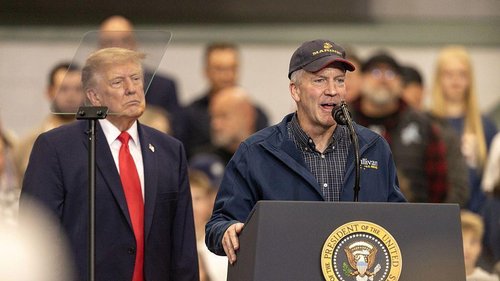
In his dramatic press conference on Saturday morning, President Trump shocked many observers by dismissing the Nobel Peace Prize winner Machado as not respected inside Venezuela, while describing Rodríguez as gracious.
I was very surprised to hear the disqualification of María Corina Machado by President Trump, Kevin Whitaker, former deputy chief of mission at the US embassy in Caracas, says.
The speed, and apparent ease, with which Maduro was removed and Rodríguez installed led some observers to speculate that the former vice president might have been in on the plan.
Instead, the decision to back Rodríguez followed warnings that installing Machado could result in dangerous levels of instability.
On Monday, the Wall Street Journal reported the existence of a classified US intelligence assessment reaching the same conclusions and determining that members of the Maduro regime, including Rodríguez, were in a better position to lead a temporary government.
The White House hasn't commented publicly on the report, but made it clear that it plans to work with Rodríguez for the foreseeable future.
At the moment, this does not appear to be high on Washington's list of priorities.
Trump may be getting something out of this, but Venezuelans aren't. Ordinary Venezuelans are getting screwed as usual, says Phil Gunson, a senior analyst living in Caracas. As the Trump administration discusses the re-investment possibilities for international oil companies in Venezuela, realities indicate complexities ahead.