In brief
In a surprising twist, Dictionary.com has named the quirky term '6-7' as its Word of the Year, a reflection of current social phenomena driven by TikTok culture and popular music. Emerging from a viral moment with a catchy rap, '6-7' remains enigmatic in its meaning, understood differently across generations. As parents and educators grapple with its rise, the term has sparked both confusion and creativity, showcasing how language evolves in the digital age.
Go ahead and roll your eyes. Shrug your shoulders. Or maybe just juggle your hands in the air.
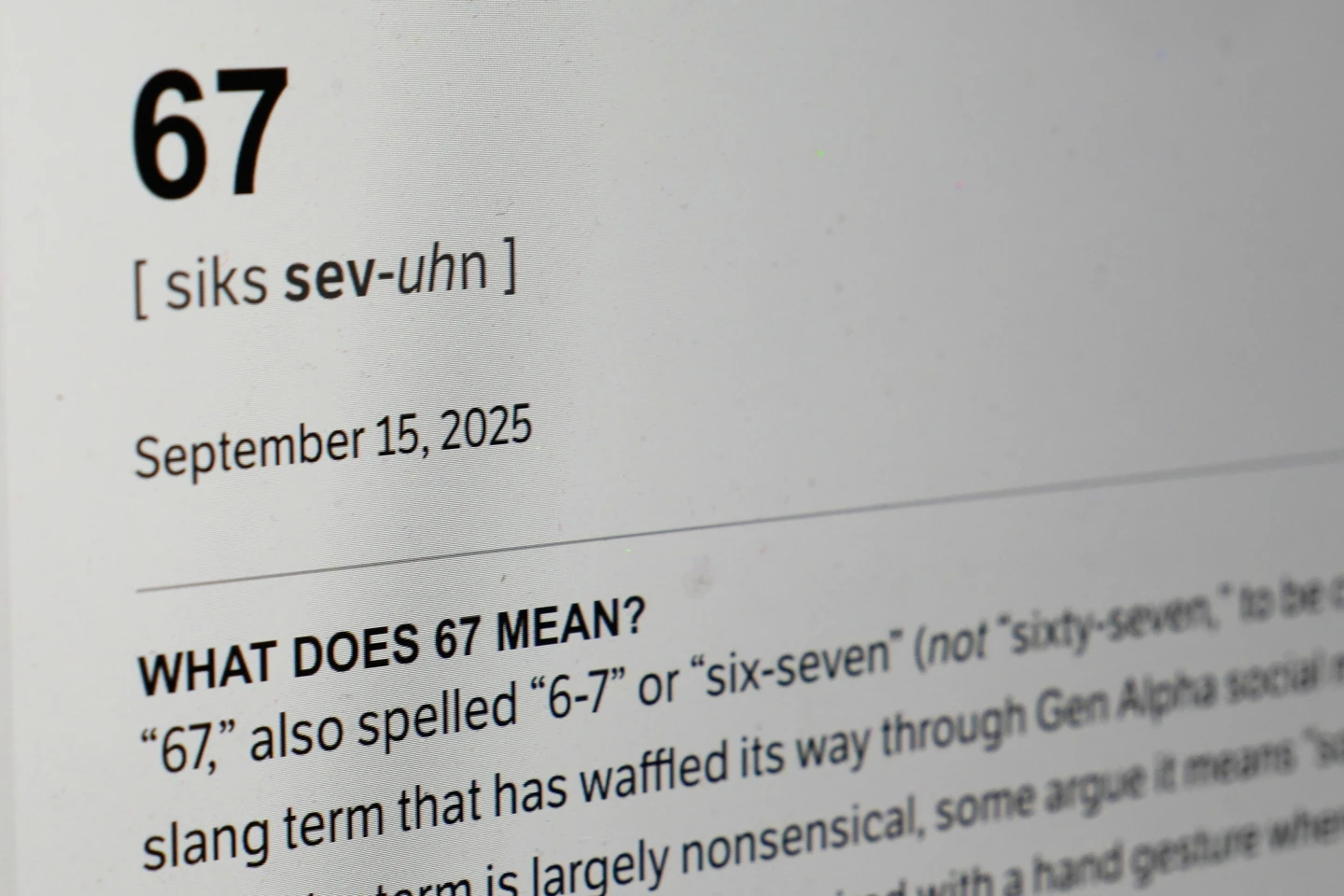
Dictionary.com’s word of the year isn’t even really a word. It’s the viral term “6-7” that kids and teenagers can’t stop repeating and laughing about while parents and teachers are left scratching their heads.
This unique phrase exploded in popularity, primarily over summer, and has now become an inside joke prevalent on social media platforms.
Dictionary.com explains that its annual selection acts as a linguistic time capsule reflecting social trends and events, adding that even they are somewhat perplexed by “6-7.”
“Don’t worry, because we’re all still trying to figure out exactly what it means,” the site admitted in its announcement.
How did '6-7' become a thing?
The roots of “6-7” appear to trace back to a song by rapper Skrilla, aptly named “Doot Doot (6-7).” The tune surged in popularity through TikTok, especially among NBA fans featuring players like LaMelo Ball, who measures 6-foot-7.
From there, a young boy dubbed “The 6-7 Kid” propelled the phrase into viral fame as he exuberantly shouted it while another kid juggled animatedly in a comedic video.
So what does '6-7' mean?
The punchline is that no one really knows — interpretations vary based on context and audience. Even the representation of the term is debatable—should it be written as "6-7" or "six seven"?
Some view it as a signifier of “so-so,” or a non-committal “maybe this, maybe that,” particularly when accompanied by the juggling gesture. As Merriam-Webster describes, it's a “nonsensical expression used especially by teens and tweens,” which some use simply to irritate adults.
Dictionary.com quips, “It’s meaningless, ubiquitous, and nonsensical. However, it still harbors meaningful connections for those who use it due to its communal essence.”
How has the rest of the world responded?
Parents and teachers have scrambled to create videos attempting to decode the phenomenon. Many between generations have resorted to humor, suggesting strategies to dampen its fervor, or even craft “6-7” themed costumes to push it out of trend.
Others have taken to banning it in educational settings, while influencers and child psychologists work to unravel its mysteries. The phrase has even reached NFL celebrations, highlighting its pervasive cultural impact.
Why is it word of the year?
Dictionary.com considers factors such as influence on conversation and online communication in its selection process. Noting a dramatic surge in online queries for “6-7” over the summer—up six times since June—it reflects the ongoing evolution of language in connection with social media trends.
The website asserts that the Word of the Year encompasses more than just a popular catchphrase; it reveals the evolving narratives we craft about ourselves throughout the year.