Jihadist groups are increasingly carrying out drone strikes in West Africa, raising alarm that they are building the capacity to wage a 'war from the skies'. A leading violence monitoring organisation, Acled, has recorded at least 69 drone strikes by an al-Qaeda affiliate in Burkina Faso and Mali since 2023, while two Islamic State (IS) affiliates have conducted around 20, mainly in Nigeria, which has battled insurgents for almost 25 years.
The latest drone attack occurred in Nigeria's north-eastern Borno state on January 29, with jihadists launching a coordinated assault using armed drones and ground fighters on a military base. The military reported the loss of nine soldiers in this attack by the Islamic State of West Africa Province (Iswap), acknowledged as the most prolific IS affiliate in African drone warfare.
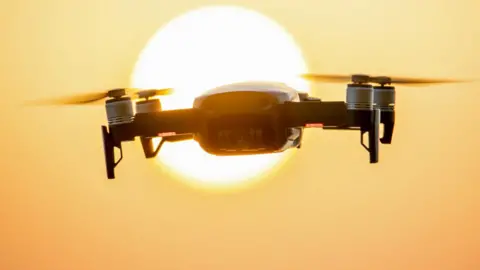
Jihadists primarily utilize commercially available quadcopter drones rigged with explosives, which are also employed for reconnaissance and surveillance in preparation for ground assaults. Despite stringent controls on drone imports and usage in Nigeria, jihadist groups acquire these devices through smuggling networks operating across porous borders.
The growing reliance on drone technology by these extremist groups is causing considerable concern. Analysts warn that drones lower operational costs, facilitate intelligence gathering with minimal risk, and enable militants to target military operations that were previously less accessible. By 2024, Iswap had executed 10 drone strikes in northeastern Nigeria, along with strikes in northern Cameroon, southern Niger, and Chad.
Adding to regional fears, the Islamic State of Sahel Province (ISSP) also targeted military and civilian locations in well-documented drone attacks, including a recent assault on international airports and military bases. JNIM, the al-Qaeda-affiliated group, accounted for the highest number of drone operations in Mali, Burkina Faso, and even in Togo.
As militant organizations adopt advanced drone warfare strategies, security experts recommend that West African nations enhance their counter-drone technology to prevent further escalation and protect civilian populations.