In brief
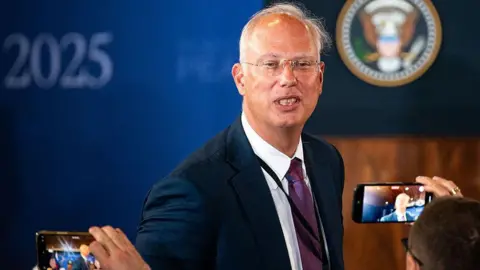
Kirill Dmitriev, the chief of Russia's Direct Investment Fund, has emerged as a significant figure in diplomatic discussions surrounding the Russia-Ukraine conflict. With a unique background that blends commercial acumen and deep understanding of U.S. politics, he has been involved in peace negotiations. However, his proposals have drawn skepticism, raising the question of whether he is a genuine peacemaker or merely a spokesperson for Russian interests.
Kirill Dmitriev is a rare breed of Russian diplomat.
At 50 he is relatively young and he has a deep understanding of the US, having studied and worked there for several years.
He is also a man of commerce, as head of the Russian Direct Investment Fund, and a good fit for his opposite number in the Trump administration, special envoy Steve Witkoff.
Dmitriev now finds himself under the spotlight over a draft peace plan that emerged after he spent three days with Witkoff in Miami.
His team has refused to comment on its proposals, which read like a Putin wishlist, requiring Ukraine to cede territory under its control and slash the size of its military.
Ukraine's Volodymyr Zelensky has been careful not to reject its terms, but says any deal must bring a dignified peace, with terms that respect our independence, our sovereignty.
Putin's special envoy understands modern Ukraine better than most in Moscow. He was brought up in Ukraine, and a friend claims that as a 15-year-old Dmitriev took part in pro-democracy protests in Kyiv before the fall of the Soviet Union.
He has been a fixture of US-Russian diplomatic initiatives pretty much since the start of Trump's second presidency - and Steve Witkoff has been a regular counterpart.
We are sure we are on the road to peace, and as peacemakers we need to make it happen, Dmitriev told a conference in Saudi Arabia in late October.
However, his direct approach to Trump officials has not always paid off. When Trump announced sanctions on Russia's top two oil firms last month, US Treasury Secretary Scott Bessent labelled him a Russian propagandist for suggesting it would mean higher US fuel prices at the pump.
Unlike the majority of Putin's entourage, the Russian leader's envoy is comfortable in a US TV studio. He is careful to praise Trump's diplomatic skills while giving Western viewers the Russian government narrative in their own language.
Dmitriev certainly is not a military guy; he's a private investment specialist with an eye for a deal.
While Dmitriev may be rising in Russia, his reputation has taken a dive in Ukraine, where sanctions have been imposed on him for alleged crimes against Ukraine and Ukrainians.
His journey from pro-democracy protests in Kyiv to the heights of Russian diplomacy illustrates a complex interplay of personal history, diplomatic motives, and geopolitical strategy.