In brief
This article explores the rise of AI-generated propaganda videos styled after Lego aesthetics, created by Explosive Media, which serve as a tool for disseminating pro-Iran narratives in the context of the US-Iran conflict. The videos have garnered millions of views and feature controversial imagery, raising questions about the nature of modern propaganda and its implications for international discourse.
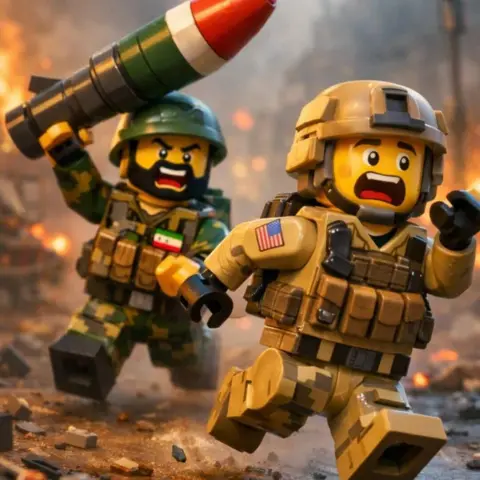
At first glance they look like they could be scenes out of a Lego movie, although more vivid and fast-paced. But these viral AI videos inspired by the instantly recognisable Lego aesthetic feature dying children, fighter jets and US President Donald Trump - and are in fact pro-Iran propaganda.For our new BBC podcast, Top Comment, we spoke to a representative of Explosive Media, one of the key accounts generating these clips. He wanted us to refer to him as Mr Explosive. He's a savvy social media operator who initially denies working for the Iranian government. In previous interviews, the outlet has said it is 'totally independent'. But upon further questioning, Mr Explosive admits the regime is a 'customer' - something he's never before confirmed publicly. The overriding message of these videos is that Iran is resisting what it sees as an almighty global oppressor: the United States. The clips are garish and not subtle at all - but that hasn't put a dent in how vigorously people are sharing and commenting on them. In one of the videos, Donald Trump falls through a whirlwind of 'Epstein file' documents as rap lyrics tell us 'the secrets are leaking, the pressure is rising'. AI-generated propaganda clips are estimated to have been viewed hundreds of millions of times over the course of the war. Social media platforms have been shutting down accounts with the Lego-style videos, but new ones seem to pop up just as quickly. It's a form of agile, aggressive internet diplomacy that appears to be here to stay, according to Dr Tine Munk, a cyber warfare expert at Nottingham Trent University, who characterises Iran's tactics as 'defensive memetic warfare.' Explosive Media videos, first appearing in early 2025, have gained an enormous following due to their sharp appeal to Western audiences. They are often produced 'in real-time,' quickly adapting to unfolding events in the war between the US and Iran, amplifying alternative narratives among English-speaking audiences and effectively bypassing traditional media channels, which Flouts earlier media biases. As this trend of AI propaganda proliferation continues, the implications for international relations and public perception are profound, raising concerns about misinformation and its capacity to escalate tensions.