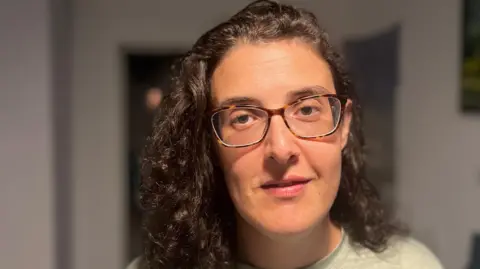
In a rare protest on a chilly Wednesday morning outside the U.S. Embassy in Kyiv, a handful of concerned Ukrainians gathered to voice their fears regarding the future of their country's support from the United States. Among them was Maryna Tymchenko, who held a homemade sign reading, “Reagan would have hated it,” a nod to the former president’s staunch anti-Soviet stance.
Feeling a mix of anger and confusion, Tymchenko expressed her dismay at President Trump's comments, which she interpreted as placing blame on Ukraine's leadership for Russia’s invasion. “It feels like a knife in the back from your dear friend,” said the 27-year-old IT worker, reflecting a sentiment shared by many who have relied on U.S. support throughout the conflict.
Despite her frustrations, Tymchenko acknowledged gratitude for past U.S. efforts to aid Ukraine’s war efforts, leaving her to question why discussions aimed at resolving the war appeared to exclude Ukrainian officials, instead focusing exclusively on U.S.-Russia negotiations.
The protest, organized with a gentle tone, lacked the fervor often seen in protests directed at foreign governments. There were no aggressive chants or expressions of hatred. Instead, the demonstrators called for a clarion call for renewed American support rooted in historical alliance and mutual understanding.
For some participants, it was a poignant moment of solidarity, an appeal for help rather than a denunciation. "Why don’t you support us?" Tymchenko asked, voicing the collective anxiety that has permeated the air in a country still yearning for stability amidst an ongoing conflict.
As they stood outside the embassy, the protestors hoped to remind their American allies of the enduring partnership forged in the face of aggression, a partnership they believe should not fray in the face of changing political winds.
Feeling a mix of anger and confusion, Tymchenko expressed her dismay at President Trump's comments, which she interpreted as placing blame on Ukraine's leadership for Russia’s invasion. “It feels like a knife in the back from your dear friend,” said the 27-year-old IT worker, reflecting a sentiment shared by many who have relied on U.S. support throughout the conflict.
Despite her frustrations, Tymchenko acknowledged gratitude for past U.S. efforts to aid Ukraine’s war efforts, leaving her to question why discussions aimed at resolving the war appeared to exclude Ukrainian officials, instead focusing exclusively on U.S.-Russia negotiations.
The protest, organized with a gentle tone, lacked the fervor often seen in protests directed at foreign governments. There were no aggressive chants or expressions of hatred. Instead, the demonstrators called for a clarion call for renewed American support rooted in historical alliance and mutual understanding.
For some participants, it was a poignant moment of solidarity, an appeal for help rather than a denunciation. "Why don’t you support us?" Tymchenko asked, voicing the collective anxiety that has permeated the air in a country still yearning for stability amidst an ongoing conflict.
As they stood outside the embassy, the protestors hoped to remind their American allies of the enduring partnership forged in the face of aggression, a partnership they believe should not fray in the face of changing political winds.