Emerging evidence of systematic killings in the Sudanese city of el-Fasher have prompted human rights and aid activists to describe the civil war between the paramilitary Rapid Support Forces (RSF) and the military as a 'continuation of the Darfur genocide'.
The fall of el-Fasher, in the Darfur region, after an 18-month RSF siege brings together different layers of the country's conflict – with echoes of its dark past and the brutality of its present-day war. The RSF emerged from the Janjaweed, Arab militias who massacred hundreds of thousands of Darfuris from non-Arab populations in the early 2000s.
The paramilitary force has been accused of ethnic killings since its power struggle with the army erupted into violence in April 2023. The RSF leadership has consistently denied the accusations, although on Wednesday, its leader Gen Mohamed Hamdan Dagalo admitted to 'violations' in el-Fasher.
The current charges are based on apparent evidence of atrocities provided by the RSF fighters themselves. They have been sharing gruesome videos reportedly showing summary executions of mostly male civilians and ex-combatants, celebrating over dead bodies, and taunting and abusing people.
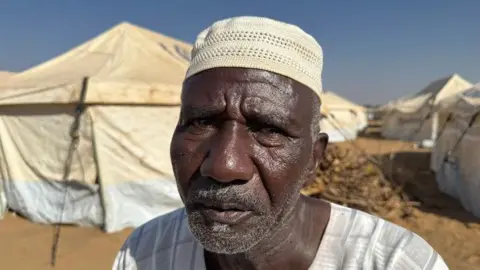
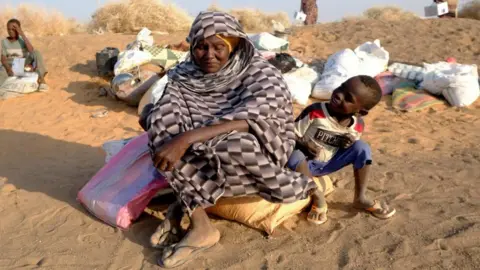
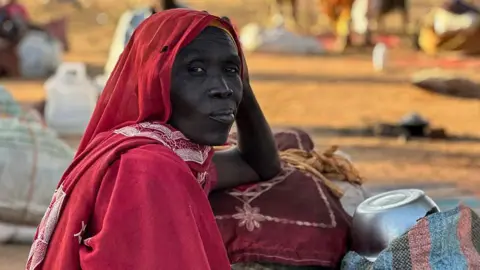
Accounts from exhausted survivors also paint a picture of terror and violence. The situation in el-Fasher is extremely dire and there are violations taking place on the roads, including looting and shooting, with no distinction made between young or old, one man told the BBC Arabic service.
Another survivor, Ikram Abdelhameed, shared that RSF soldiers separated fleeing civilians at an earthen barrier around the city, shooting the men. Visual evidence provided by satellite images indicates massacre sites, as analyzed by Yale University's Humanitarian Research Lab.
El-Fasher is experiencing a systematic and intentional process of ethnic cleansing of indigenous non-Arab communities through forced displacement and summary execution, researchers have concluded. The battle’s ethnic component is underscored by clashes between the RSF and local armed groups from the Zaghawa tribe, who are perceived as legitimate targets by RSF fighters.
Both sides have been accused of war crimes in what appears to be ethnically motivated revenge attacks. Past patterns of violence re-emerge, highlighting a continuation of a harrowing cycle of persecution and genocide.
Despite Gen Dagalo’s recent promises regarding accountability, skepticism remains due to the RSF’s history of unfulfilled commitments. Activists urge an immediate intervention from the international community, likening the situation to the Srebrenica massacre and calling for urgent action to protect civilians.
As the violence escalates, it is crucial that global stakeholders respond decisively to prevent another humanitarian catastrophe in Sudan.