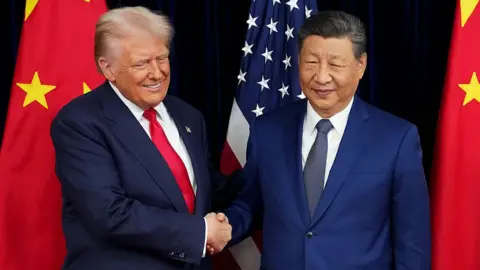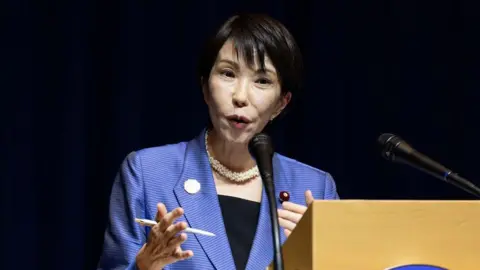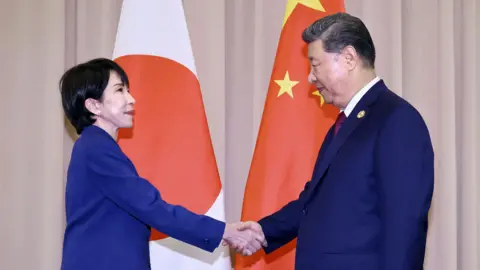
China has summoned the Japanese ambassador in Beijing over Prime Minister Sanae Takaichi's comments on Taiwan.
China and Japan have been locked in an escalating war of words this week, set off by Takaichi's suggestion that Japan could respond with its own self-defence force if China attacked Taiwan.
Both countries' foreign ministries have lodged serious protests with each other. A Chinese diplomat also made a comment which some interpreted as a threat to behead Takaichi.
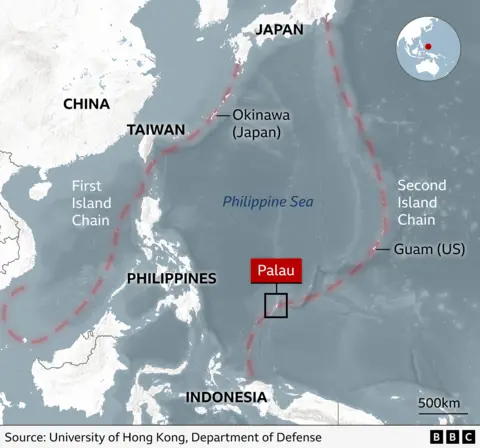
The spat touches on the historical animosity between China and Japan, as well as longstanding strategic ambiguity on the sovereignty of self-governed Taiwan.
What happened? A timeline
The current tensions were sparked at a parliamentary meeting in Japan last Friday, when an opposition lawmaker asked Takaichi what circumstances surrounding Taiwan would count as a survival-threatening situation for Japan.
If there are battleships and the use of force, no matter how you think about it, it could constitute a survival-threatening situation, Takaichi responded.
A survival-threatening situation is a legal term under Japan's 2015 security law, referring to when an armed attack on its allies poses an existential threat to Japan. In such a situation, Japan's self-defence forces can be activated to respond to the threat.
Takaichi's remarks drew immediate ire from Beijing, with China's foreign ministry describing them as egregious.
On Saturday, Xue Jian, China's consul general in Osaka, reshared a news article about Takaichi's parliamentary remarks on X. He also added a comment that the dirty head that sticks itself in must be cut off.
While the intent of Xue's remarks may not be clear, they were highly inappropriate, Japan's chief cabinet secretary Minoru Kihara told reporters on Monday.
Tokyo lodged protests with China over Xue's remarks, while Beijing lodged its own with Japan over Takaichi's.
Xue's post has since been taken down - but the dust from the barbed exchanges hasn't settled yet.
On Tuesday, Takaichi declined to retract her remarks, which she defended as consistent with the government's traditional position.
Then on Thursday, China's foreign ministry warned Japan to stop playing with fire and that it would be an act of aggression if Japan dares to meddle in the cross-Strait situation.
Chinese Vice Foreign Minister Sun Weidong also summoned the Japanese ambassador to express their unhappiness.
Sun called Takaichi's remarks extremely wrong and dangerous and demanded an official withdrawal of such comments, indicating that otherwise all consequences must be borne by Japan.
Japan's ambassador explained that their position on Taiwan has not changed and refuted Beijing's remarks, as Chief Cabinet Secretary Kihara highlighted Japan's hope for a peaceful resolution of issues surrounding Taiwan through dialogue.
A long history of animosity
There is longstanding animosity between the two countries, tracing back to armed conflicts in the 1800s and Japan's brutal military campaign in China during World War Two.
This was referenced by China's Ministry of Foreign Affairs, warning that if Japan risks military intervention in Taiwan, it would face severe consequences.
The recent political dynamics, marked by Takaichi's hawkish stance, signal potential for increased conflict as Japan pursues closer relations with the US and elevates its defense spending.
Takaichi's comments stirred backlash due to a shift from Japan's historically ambiguous position on Taiwan's sovereignty, aligning instead with a more assertive approach in coordination with US policy.
Japan hopes that Taiwan's issues can be resolved through peaceful dialogue while avoiding confrontation with China, despite the rising tensions.