In brief
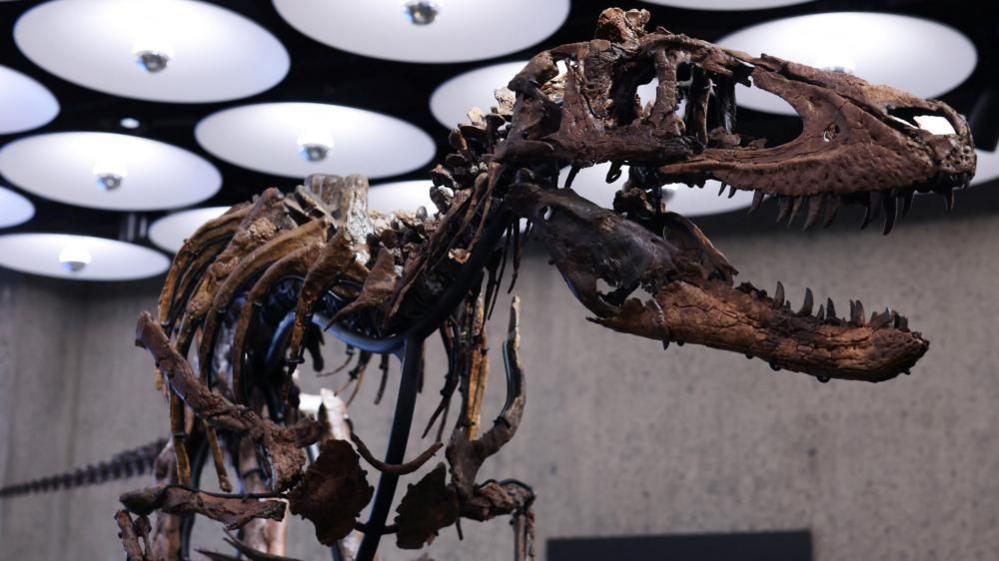
The mounted skeleton of the newly confirmed Nanotyrannus, dubbed "Jodi", will be auctioned in New York with a £4.5m starting bid. Scientists and conservationists warn that such high‑value sales risk keeping historic specimens out of public view, potentially hindering research and educational outreach. The fossil, discovered in Montana in 2023 and later confirmed as a distinct genus the previous year, is one of only three complete Nanotyrannus skeletons known. While private collectors argue for the right to own and display unique artifacts, experts emphasize the importance of museums and universities in preserving shared scientific heritage. The case joins a growing debate in the paleontological community on balancing financial interests with collective knowledge and public engagement.
A 10‑foot‑tall skeleton, once mistaken for a juvenile Tyrannosaurus rex, is heading to a New York auction with a starting price of £4.5 million. The specimen, nicknamed "Jodi", represents the Nanotyrannus genus confirmed by researchers a year ago.
Sotheby’s describes the skeleton as an exhibition‑ready piece with 191 fossil bones and a virtually complete skull, and states it is one of only three such skeletons known to science. The auction could fetch up to $9 million when the bidding begins on Tuesday.
The sale has ignited concern among paleontologists, who argue that private ownership of significant fossils limits scientific study and public access. Prof. Steve Brusatte, a consultant on the Jurassic Park films, warned that a record‑breaking auction could set a precedent for high‑value fossil sales that keep artifacts out of museums.
Jodi Pierson, the rancher who discovered the skeleton in Montana, and Clayton Phipps, the commercial palaeontologist who excavated it, have both expressed mixed feelings. While acknowledging the financial allure, they also emphasise that most of the world owes knowledge of such specimens to public institutions.
The fossil’s discovery ties into a larger narrative about how humanity interprets and preserves its natural past. The broader conversation touches on climate history, biodiversity loss and the stewardship of Earth's heritage. Ensuring that pioneering finds remain accessible can inspire future generations and inform contemporary environmental policy.