In brief
In South Africa, amidst strict drug laws, shamans openly offer psychedelic therapies for mental health treatment, drawing both interest and concern. As individuals like photographer Stuart Dods seek relief from psychological distress through these unregulated practices, medical professionals warn of potential dangers in such unorthodox treatments. This article explores the tensions between alternative healing methods and the legal and ethical implications surrounding them.
Although psychedelic drugs are illegal in South Africa, many self-appointed healers and shamans based in Cape Town are openly advertising that they incorporate them in their therapies.
Anyone convicted of their commercial use faces a fine, a prison sentence of up to 25 years, or both.
Photographer Stuart Dods is one of those willing to take the treatment from a shaman.
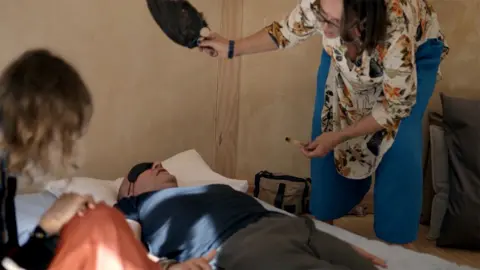
In an elegant wooden cabin nestled in the forest on Cape Town's outskirts, he is about to undergo his second psychedelic experience to treat a series of mental health issues he has been suffering from. He has tried prescription medication but is convinced psychedelics hold the key to his healing.
Mum passed away suddenly, so that was a hell of a thing. And then my ex broke off a year after mum died as well. So that's kind of when the rug got pulled out a little bit, says the 53-year-old.
At a cost of around $2,000 (£1,500), the psychedelic experience he has chosen involves taking doses of psilocybin (also known as magic mushrooms) and MDMA (also known as the party drug, ecstasy). The organisers say the fee also includes accommodation and a package of support services.
There is a growing body of research and trials into their effectiveness in treating mental health conditions, but there are warnings about their use outside of controlled, clinical settings.
Megan Hardy, who refers to herself as a medicine woman and is in charge of the session with Mr. Dods, also takes a smaller dose of both drugs ahead of the ritual. She claims it helps her move into the same frequencies as the person she is treating.
The shamanic term is a foot in each world, she says.
Ms. Hardy is aware of the illegality of using these types of drugs, but she claims the use is righteous civil disobedience.
Greater awareness of mental health issues, coupled with a rise in the clinical trials involving psychedelics, has fueled public interest in the use of these drugs to treat conditions like depression, anxiety and Post-Traumatic Stress Disorder (PTSD).
However, many professionals caution against the unregulated nature of these treatments. Dr. Marcelle Stastny, from the South African Society of Psychiatrists, warns about the dangers of consent in such altered states, emphasizing that true consent can only occur when both parties are fully in touch with reality.
The growing psychedelic service sector in South Africa could potentially pose risks, with reports of fatal outcomes linked to the unregulated use of psychedelics, particularly Ibogaine, another powerful substance.
While there is intrigue surrounding the effectiveness of psychedelics in mental health care, the question remains: can these illicit therapies be harnessed safely and responsibly?
}