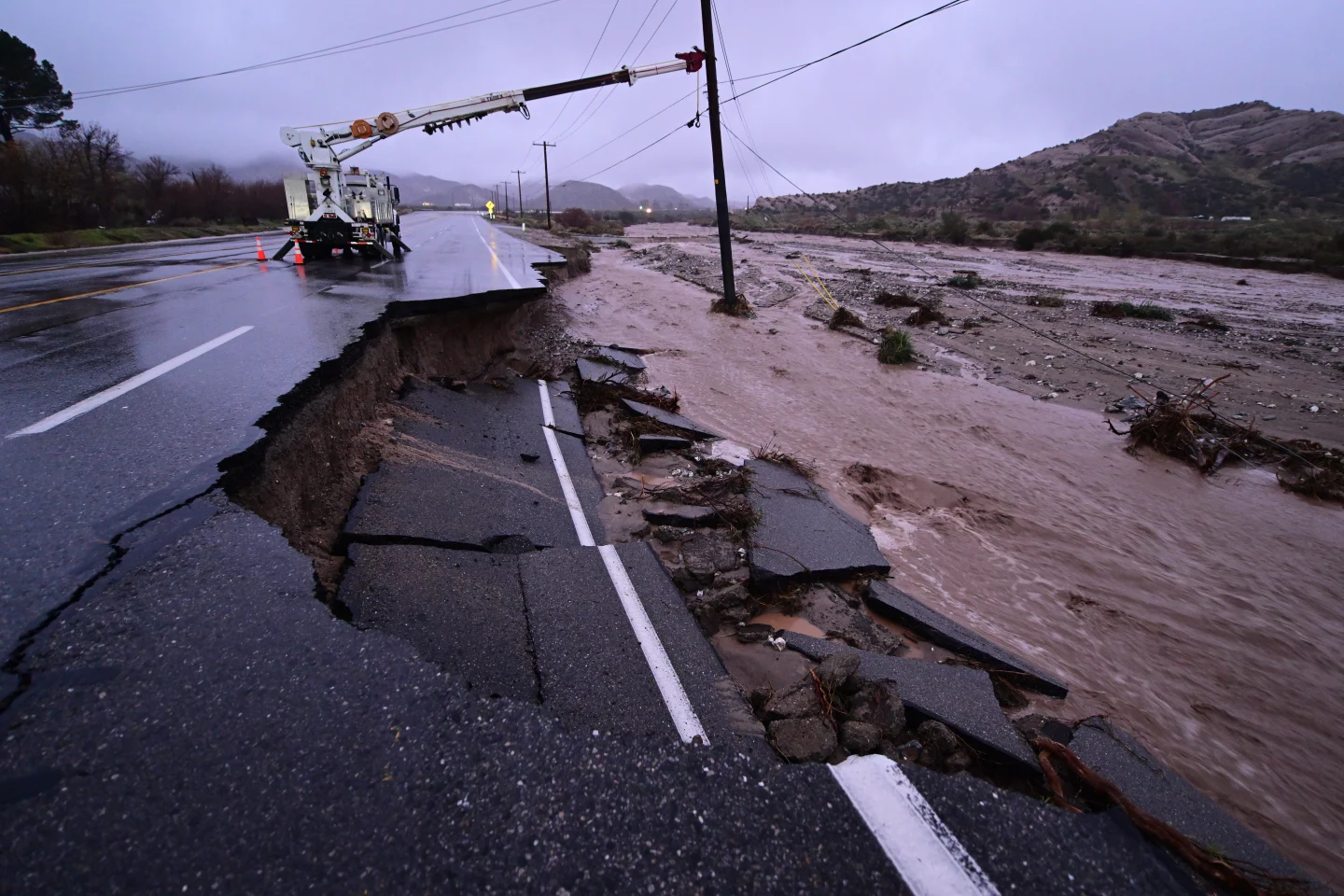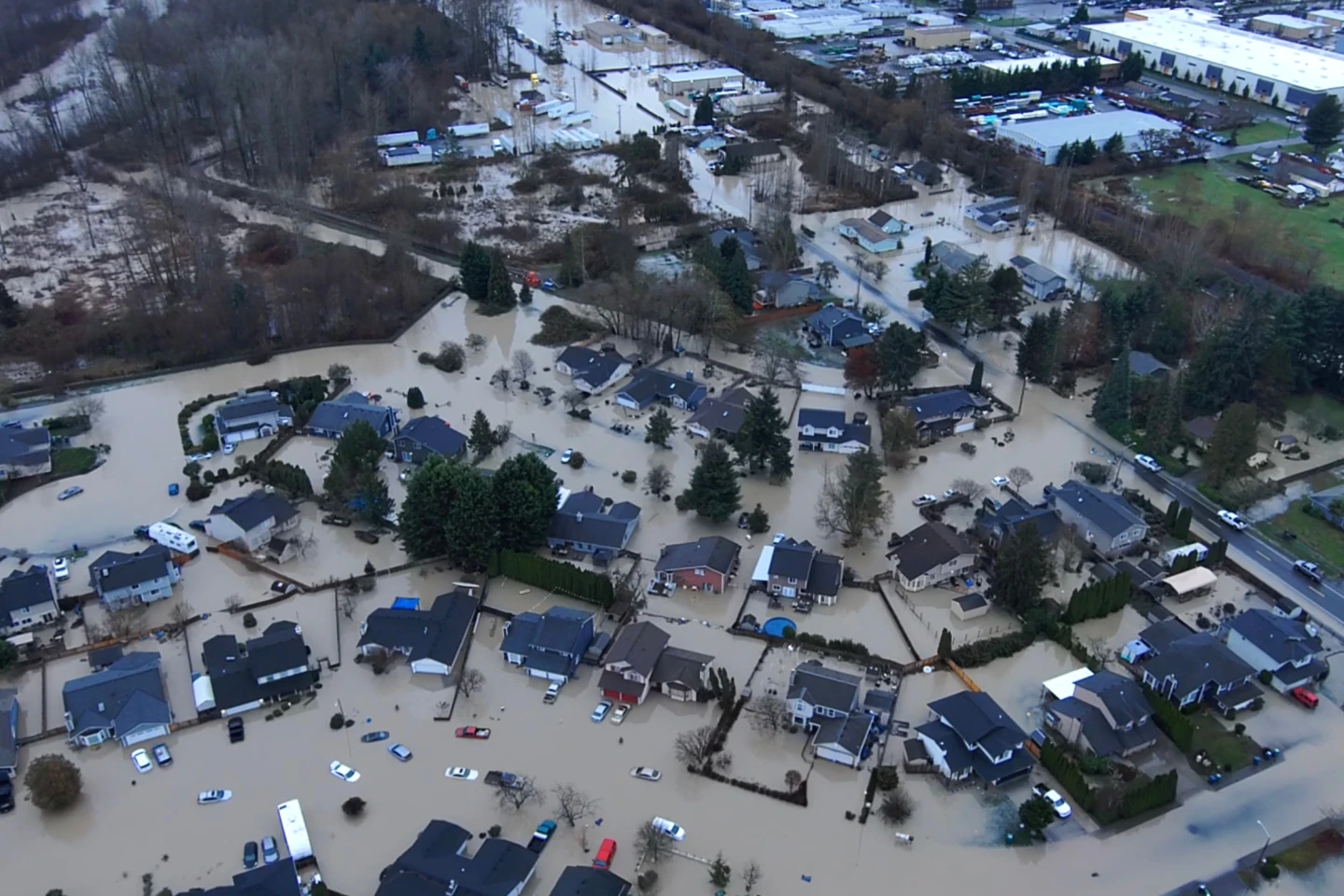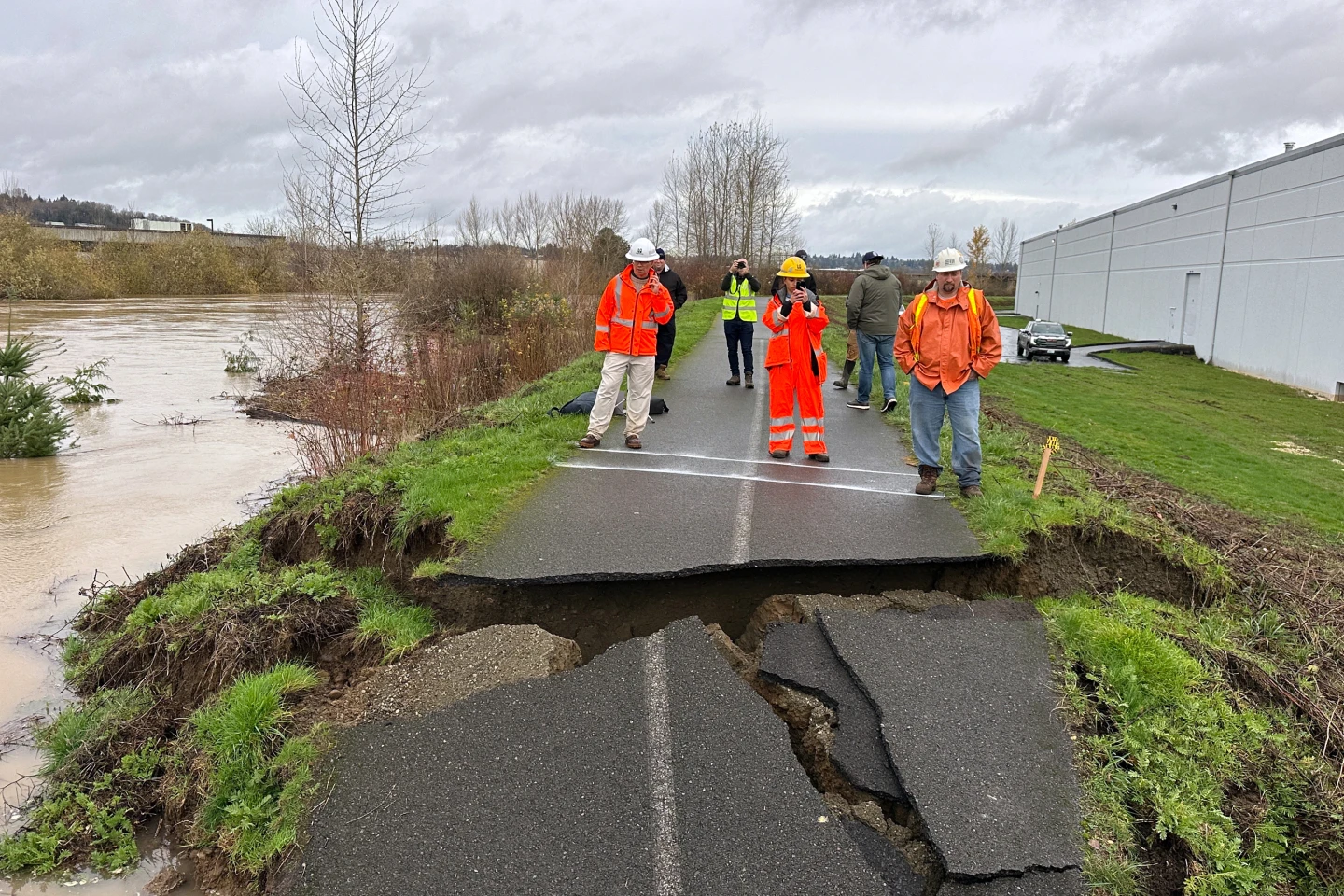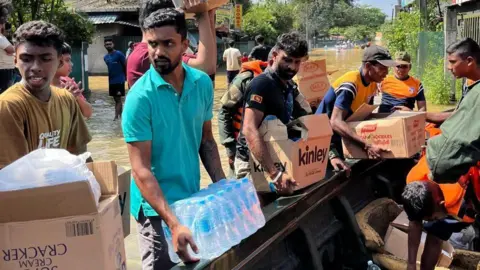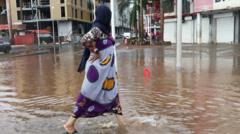
The French Indian Ocean territory of Mayotte is in crisis mode once again as it faces heavy rains from storm Dikeledi, leading to significant flooding and mudslides throughout the archipelago. This latest weather disaster comes just a month after Cyclone Chido wreaked havoc, resulting in numerous fatalities and widespread destruction.
As Dikeledi approached on Sunday, local authorities declared the highest state of alert, warning residents to prepare for violent winds, flash floods, and potential landslides. François-Xavier Bieuville, the prefect of Mayotte, informed French news channel BFMTV that the storm has already begun causing significant disruptions, including downed power lines and flooding in areas previously untouched by the cyclone.
The southern village of Mbouini, which had previously been spared the harsh effects of Cyclone Chido, is now reportedly underwater. With storm Dikeledi making landfall in northern Madagascar on Saturday and already claiming at least three lives, the threat to Mayotte is increasingly serious. By Sunday afternoon, Météo-France reported that the storm was moving southward but heavy rain was expected to persist.
As conditions evolved, emergency shelters had been set up to accommodate approximately 14,500 displaced residents. Tools for recovery and safety will remain vital as the island is expected to stay under red alert through Monday evening.
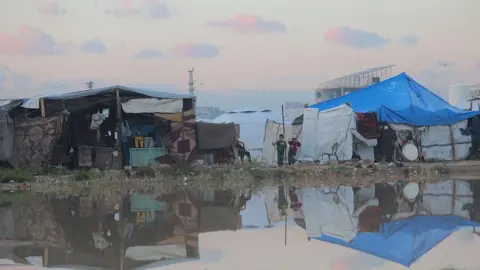
As Dikeledi's forecast suggests it may strengthen into a tropical cyclone while moving towards Mozambique, further complications loom for this already vulnerable region. Mayotte has faced significant hardships following Cyclone Chido, which left a heavy toll of loss and property damage, highlighting the dire conditions many residents live under, especially those in shanty towns where housing is ill-equipped to withstand such disasters.
The impact of these storms serves as a stark reminder of the climate vulnerabilities faced by the islands, amid an estimated population of 320,000 residents, punctuated by the presence of undocumented migrants, whose needs and challenges are often overlooked in crisis responses.