In brief
Following the devastation of Cyclone Senyar, conservationists are alarmed by the disappearance of Tapanuli orangutans in North Sumatra. With fewer than 800 individuals left, any loss poses a critical threat to their survival. The cyclone has left behind a carcass in a mudslide, sparking fears that more orangutans have perished. The destruction of 7,200 hectares of forest due to flooding raises urgent concerns about the species and their habitat.
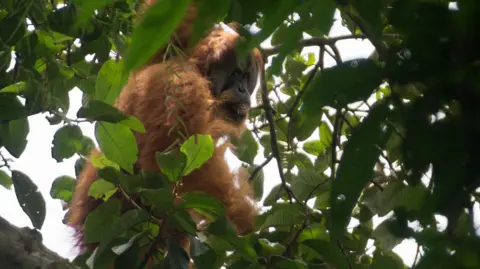
In the aftermath of Cyclone Senyar, the muted chorus of wildlife in North Sumatra's forests raises alarms among wildlife experts. The Tapanuli orangutans, recognized as the rarest apes globally, have not been spotted since the cyclone struck on November 25. Conservationists fear these critically endangered primates may have fallen victim to the floods and landslides that wreaked havoc across the region.
Humanitarian workers reported discovering a carcass, believed to be that of an orangutan, buried beneath mud and debris in the Tapanuli district. This discovery is breeding concern about the fate of already dwindling orangutan numbers, with estimates indicating fewer than 800 remain.
Deckey Chandra, part of the humanitarian team, recounted seeing the defaced carcass, reflecting the broader tragedy unfolding in the orangutan's habitat. 'They used to come to this place to eat fruits. But now it seems to have become their graveyard,' he lamented.
Over 900 fatalities have been reported due to Cyclone Senyar, with hundreds still unaccounted for, as entire villages have been obliterated. The destruction of approximately 7,200 hectares of forest, critical for the survival of orangutans, is a significant blow to the species. Experts estimate that each destroyed area may have housed orangutans, raising fears that all could be lost in this disaster.
While some locals speculate that the orangutans may have fled the area before the cyclone, primate experts warn that this may not have been possible given the scale of destruction and flooding. The urgency to rebuild research centers focused on orangutan conservation is mounting as habitat destruction threatens the very existence of the Tapanuli orangutan.
The plight of these unique primates reminds us of the broader environmental impacts of climate change and extreme weather events, which disproportionately affect vulnerable species and ecosystems. Immediate action is needed to assess the situation and protect what little remains of the Tapanuli orangutans' habitat.