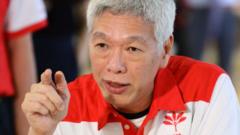
In a dramatic turn of events, Lee Hsien Yang, the son of Singapore’s founding Prime Minister Lee Kuan Yew, has successfully claimed asylum in the United Kingdom, citing fears of persecution related to a prolonged and high-profile family dispute. Yang accused the Singapore government, led by his brother Lee Hsien Loong, of oppressing him and suppressing his political rights, claims which the government firmly denies.
Recently, Yang shared documents with the BBC confirming his asylum status, which includes a letter from the UK government granting him “refugee status” for five years, acknowledging his legitimate fear of returning to Singapore. His wife has also been granted asylum, as the couple, along with one of their sons, have been living in self-imposed exile for several years.
“This was a last resort for me,” Yang said, stressing that he remains a citizen of Singapore and harbors hope for a future return to his homeland. Once integral to Singapore’s political and economic fabric — having served as head of the nation’s largest telecommunications company — he has turned into a vocal opponent of the island’s ruling party after falling out with his brother, who was Prime Minister until earlier this year.
Yang and his late sister, Lee Wei Ling, have accused their brother of exploiting their father’s legacy to perpetuate a political dynasty. They have also cited various instances of legal actions and investigations against them as systematic persecution by the state. The Singapore government has vehemently rejected these allegations, asserting that there are no restraints on Yang’s return.
The quarrel between the brothers intensified after their father’s death in 2015, particularly concerning their family home at 38 Oxley Road. The house has become a symbol of their discord as it was part of Lee Kuan Yew's last wishes, which were for the property to be demolished after his death. However, Lee Hsien Loong opted to preserve the house, contradicting his siblings' desires to fulfill their father’s wishes. Following recent family tragedies, including his sister’s passing from a brain disease, Yang has moved to expedite the demolition of the house under the premise of constructing a private dwelling for the family.
As the tensions within this influential family escalate, the implications for Singapore’s political landscape and the legacy of its founding leader continue to unfold, with both domestic and international eyes watching closely.
Recently, Yang shared documents with the BBC confirming his asylum status, which includes a letter from the UK government granting him “refugee status” for five years, acknowledging his legitimate fear of returning to Singapore. His wife has also been granted asylum, as the couple, along with one of their sons, have been living in self-imposed exile for several years.
“This was a last resort for me,” Yang said, stressing that he remains a citizen of Singapore and harbors hope for a future return to his homeland. Once integral to Singapore’s political and economic fabric — having served as head of the nation’s largest telecommunications company — he has turned into a vocal opponent of the island’s ruling party after falling out with his brother, who was Prime Minister until earlier this year.
Yang and his late sister, Lee Wei Ling, have accused their brother of exploiting their father’s legacy to perpetuate a political dynasty. They have also cited various instances of legal actions and investigations against them as systematic persecution by the state. The Singapore government has vehemently rejected these allegations, asserting that there are no restraints on Yang’s return.
The quarrel between the brothers intensified after their father’s death in 2015, particularly concerning their family home at 38 Oxley Road. The house has become a symbol of their discord as it was part of Lee Kuan Yew's last wishes, which were for the property to be demolished after his death. However, Lee Hsien Loong opted to preserve the house, contradicting his siblings' desires to fulfill their father’s wishes. Following recent family tragedies, including his sister’s passing from a brain disease, Yang has moved to expedite the demolition of the house under the premise of constructing a private dwelling for the family.
As the tensions within this influential family escalate, the implications for Singapore’s political landscape and the legacy of its founding leader continue to unfold, with both domestic and international eyes watching closely.