In brief
The migration landscape in Europe is increasingly seeing single women like Esther, who escape violence and seek a better life, but face grave risks of sexual exploitation. Reports reveal a 250% annual increase in single adult women arriving via the Balkan route, often subjected to abuse by smugglers and traffickers. The narratives of women like Esther and Nina highlight the challenges of seeking asylum in a system that often fails to protect the most vulnerable.
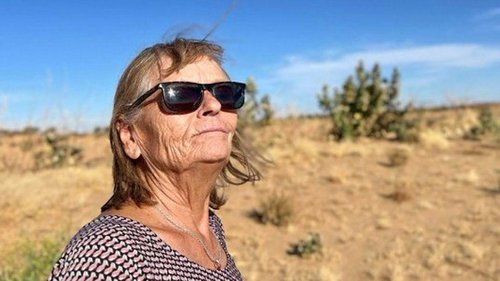
Esther was sleeping on the streets of Lagos when a woman approached her with the promise of a route out of Nigeria to a job and a home in Europe.
She had dreamt of a new life, especially in the UK. Thrown out of a violent and abusive foster home, she had little to stay for. But when she left Lagos in 2016, crossing the desert to Libya, she had little idea of her traumatic journey ahead, forced into sex work and years of asylum claims in country after country.
The majority of irregular migrants and asylum seekers are men - 70% according to the European Agency for Asylum - but the number of women like Esther, who have come to Europe to seek asylum is on the rise.
We are seeing an increase in women travelling alone, both on the Mediterranean and the Balkan routes, says Irini Contogiannis from the International Rescue Committee in Italy.
Its 2024 report highlighted a 250% annual rise in the number of single adult women arriving in Italy on the Balkan route, while families grew by 52%.
Migrant routes are notoriously treacherous. Last year 3,419 migrant deaths or disappearances in Europe were recorded by the International Organization for Migration (IOM) - the deadliest year on record.
But for women, there is the added threat of sexual violence and exploitation, which happened to Esther after she was betrayed by the woman who had promised her a better life.
She locked me up in a room and brought in a man. He had sex with me, with force. I was still a virgin, Esther says. That's what they do… travel to different villages in Nigeria to pick young girls, and bring them to Libya to become sex slaves.
Their experiences are different and often riskier, Ugochi Daniels of the IOM told the BBC. Even women travelling in groups often lack consistent protection, exposing them to abuse by smugglers, traffickers, or other migrants.
Many women are aware of the risks but go anyway, packing condoms, or even getting contraceptive devices fitted in case they are raped on the way.
All migrants have to pay a smuggler, says Hermine Gbedo of the anti-trafficking network Stella Polare. But women are often expected to offer sex as part of the payment.
Ms Gbedo supports women migrants in Trieste, a port city in north-east Italy which has long been a crossroads of cultures and serves as a major entry point to the European Union for those crossing from the Balkans. From here, they continue to countries like Germany, France, and the UK.
After four months of being exploited in Libya, Esther escaped and crossed the Mediterranean in a rubber dinghy from which she was rescued by the Italian coast guard and taken to the island of Lampedusa.
She claimed asylum three times before she was granted refugee status.
Asylum seekers from countries viewed as safe are often rejected. At the time Italy viewed Nigeria as unsafe, but two years ago it changed that assessment as governments across Europe began tightening their rules in response to the big migrant influx into Europe of 2015-16. Voices calling for further restrictions on asylum claims have only grown louder since.
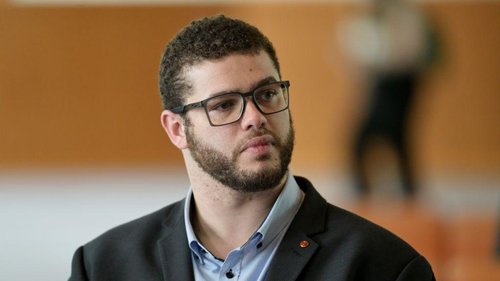
It's impossible to sustain mass migration -- there is no way, says Nicola Procaccini, an MP in Giorgia Meloni's right wing government. We can guarantee a safe life to those women who are really in danger, but not to all of them.
Currently this is not happening consistently, he argues, and while he sympathises with the plight of women facing hazardous routes into Europe the key is controlled compassion.
However, many women arriving from countries considered safe claim that the abuse they suffered on account of being a woman has meant that life in their home countries has become impossible.
This was the case for Nina, a 28-year-old from Kosovo.
People think everything is well in Kosovo, but that's not true, she says. Things are terrible for women.
A 2019 report by Europe's OSCE security organisation suggested that 54% of women in Kosovo had experienced psychological, physical or sexual violence from an intimate partner since the age of 15.
Women who face persecution on the grounds of gender-based violence are entitled to asylum under the Council of Europe's Istanbul Convention, and that was backed up by a landmark ruling by the EU's top court last year. The Convention details gender-based violence as psychological, physical and sexual - and includes female genital mutilation (FGM).
However, its terms are not yet applied consistently, according to charity groups.
A lot of asylum officials in the field are men who are insufficiently trained to deal with such a delicate issue [as female genital mutilation] - both medically and psychologically, says Marianne Nguena Kana, Director of End FGM European Network.
Many women have their asylum claims denied, she says, on the mistaken assumption that, because they have already undergone FGM, they face no further risk.
These prevailing issues reflect the dire reality faced by many single women migrants, leading them to question the value of the journeys they undertake for a chance at a better future.