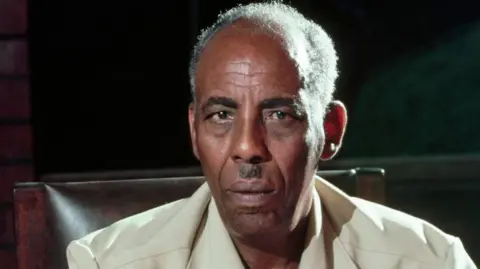
Exactly 31 years ago to the day, two Kenyan pilots, Hussein Mohamed Anshuur and Mohamed Adan, received an unexpected visitor at their office at Wilson Airport near Nairobi. It was a Nigerian diplomat who drew them into a sensitive and secretive mission to fly the body of Somalia's former ruler, Siad Barre, back to his homeland for burial. Barre had died in exile in Nigeria at the age of 80.
Anshuur, a former captain in the Kenyan Air Force, spoke to the BBC about how the diplomat quickly asked them to charter an aircraft to transport the body from Lagos to Barre's hometown, Garbaharey, a distance of about 4,300 km (2,700 miles). Anshuur immediately realized this was far from a normal charter request.
Barre's return to Somalia was fraught with political tension, following his overthrow on January 28, 1991. The pilots feared the repercussions if the Kenyan authorities discovered the mission and debated the request throughout the day. They knew the political landscape was delicate, and even the clandestine nature of the operation had significant implications.
Initially, they suggested using a Nigerian Air Force aircraft, but the diplomat insisted on keeping the mission secret from the Kenyan government. Anshuur stressed that the urgency of the burial, consistent with Islamic traditions, required that they bypass all usual procedures.
Upon agreeing to undertake the mission, Anshuur and Adan received guarantees from the Nigerian government about their protection in case of political fallout. The pilots expertly crafted a plan to maintain secrecy throughout the operation.
After careful planning and delaying their departure until early morning hours to avoid detection, they filed a flight manifest listing a false destination of Kisumu in Kenya. Taking advantage of 1995’s limited radar coverage, they diverted their flight through Entebbe, Uganda, before continuing back to Nigeria.
Once they arrived in Lagos, the actual burial destination was finally confirmed. On January 12, 1995, the pilots prepared for the flight to Garbaharey, now accompanied by Barre's family members. The necessity of secrecy was paramount - they did not disclose their cargo to any authorities en route.
In the final leg to Garbaharey, the pilots’ anxiety peaked. After successfully transferring the casket for burial, they completed their mission and returned safely, relieved but aware of the gravity of their actions. Reflecting on the experience, Anshuur expressed his reluctance to engage in such a mission today due to the advanced air traffic monitoring that now exists.
Anshuur, a former captain in the Kenyan Air Force, spoke to the BBC about how the diplomat quickly asked them to charter an aircraft to transport the body from Lagos to Barre's hometown, Garbaharey, a distance of about 4,300 km (2,700 miles). Anshuur immediately realized this was far from a normal charter request.
Barre's return to Somalia was fraught with political tension, following his overthrow on January 28, 1991. The pilots feared the repercussions if the Kenyan authorities discovered the mission and debated the request throughout the day. They knew the political landscape was delicate, and even the clandestine nature of the operation had significant implications.
Initially, they suggested using a Nigerian Air Force aircraft, but the diplomat insisted on keeping the mission secret from the Kenyan government. Anshuur stressed that the urgency of the burial, consistent with Islamic traditions, required that they bypass all usual procedures.
Upon agreeing to undertake the mission, Anshuur and Adan received guarantees from the Nigerian government about their protection in case of political fallout. The pilots expertly crafted a plan to maintain secrecy throughout the operation.
After careful planning and delaying their departure until early morning hours to avoid detection, they filed a flight manifest listing a false destination of Kisumu in Kenya. Taking advantage of 1995’s limited radar coverage, they diverted their flight through Entebbe, Uganda, before continuing back to Nigeria.
Once they arrived in Lagos, the actual burial destination was finally confirmed. On January 12, 1995, the pilots prepared for the flight to Garbaharey, now accompanied by Barre's family members. The necessity of secrecy was paramount - they did not disclose their cargo to any authorities en route.
In the final leg to Garbaharey, the pilots’ anxiety peaked. After successfully transferring the casket for burial, they completed their mission and returned safely, relieved but aware of the gravity of their actions. Reflecting on the experience, Anshuur expressed his reluctance to engage in such a mission today due to the advanced air traffic monitoring that now exists.