In brief
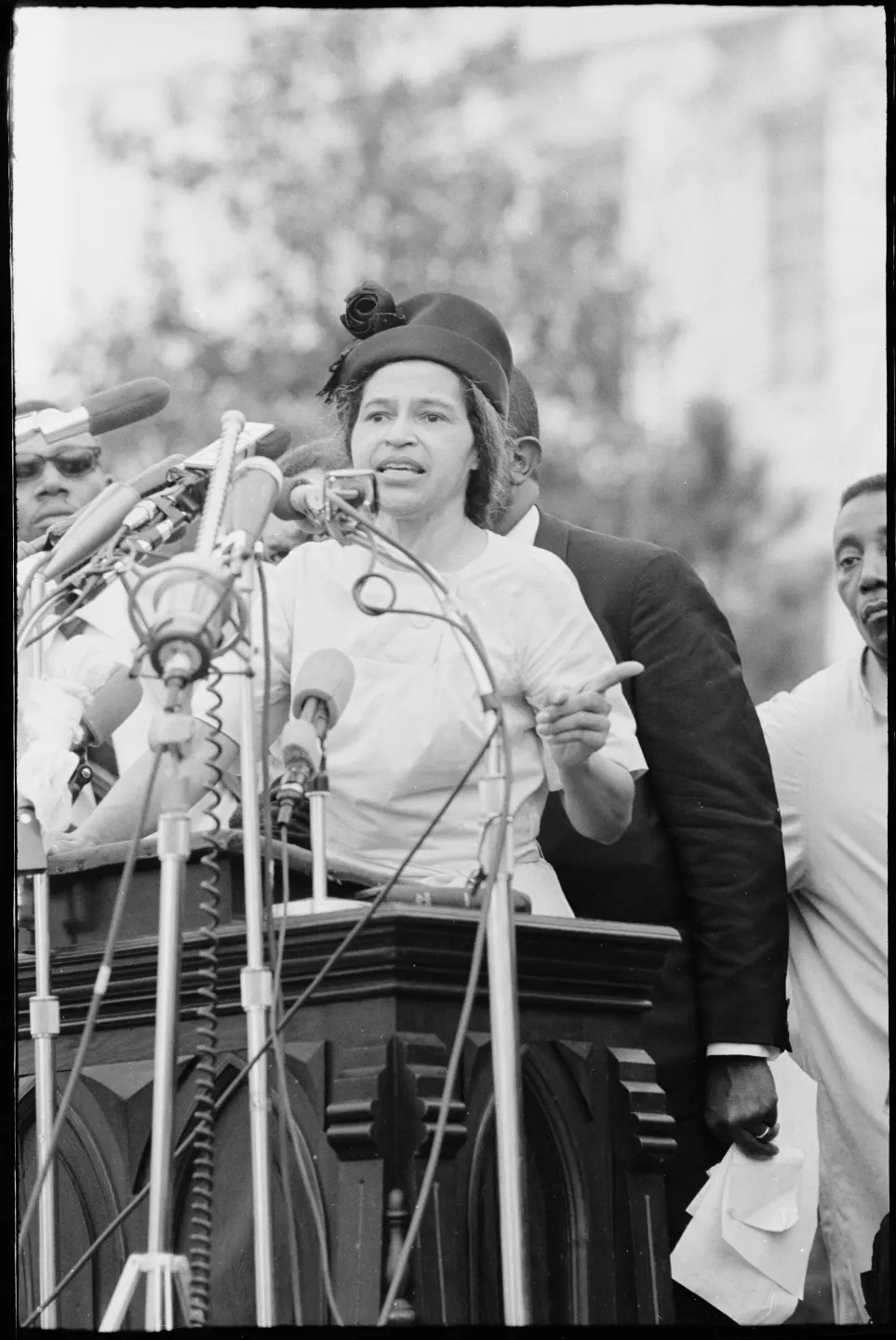
Seventy years after Rosa Parks famously refused to give up her bus seat, new photographs from the Selma to Montgomery march have emerged, providing a deeper insight into her activism and the collective effort of everyday citizens in the Civil Rights Movement. These photos, taken by the late photographer Matt Herron, reveal often overlooked aspects of Parks' legacy and serve as a vital connection to history for families who participated in the movement.
MONTGOMERY, Ala. — Seven decades after Rosa Parks made history by refusing to give up her bus seat, new photos capturing her involvement in the Civil Rights Movement were made public for the first time. Taken by prominent photographer Matt Herron during the historic march from Selma to Montgomery in 1965, these images reveal aspects of Parks' legacy often overlooked in traditional narratives. While Parks is widely recognized for her pivotal role in initiating the Montgomery Bus Boycott in 1955, her activism extended far beyond that singular event.The release of these never-before-seen photos coincided with the 70th anniversary of the boycott, which catalyzed the fight against racial segregation in public transportation. Donna Beisel, director of the Rosa Parks Museum, emphasizes that these images showcase Parks not just as an icon, but as a devoted activist. The photographs, some previously unpublished, depict Parks amongst fellow marchers, illustrating a collective struggle for civil rights.Herron's photographs were rediscovered in a contact sheet at Stanford University. His wife, Jeannine Herron, noted that many of these snapshots were neglected due to blurry quality or the absence of well-known figures in the frame. Now, as they resurface, they invite historians and communities to reconnect with their pasts and understand the contributions of individuals who fought for equality.Among those captivated by these revelations is Doris Wilson, a former marcher who had a poignant reunion with Dr. June Finer, who treated her blisters during the march. Their embrace underscores the deep personal connections forged during this transformative period in history.The legacy of the Civil Rights Movement is woven into the fabric of communities like Marion, Alabama, where families recall the sacrifices made for justice. Cheryl Gardner Davis, whose family hosted marchers, reflects on the validation these photos provide, emphasizing the importance of recognizing the everyday heroes in this monumental struggle.As these images circulate, they serve as a reminder of the collective efforts that were instrumental in changing the landscape of civil rights in America.