In brief
NASA's Artemis II mission has successfully demonstrated the capabilities of the Orion spacecraft with crew onboard, raising optimism for a return to the Moon. The mission has showcased the smooth operation of the Space Launch System and provided valuable insights into human-technology interaction in space. However, questions remain about the feasibility of a lunar landing by 2028 amidst other necessary preparations.
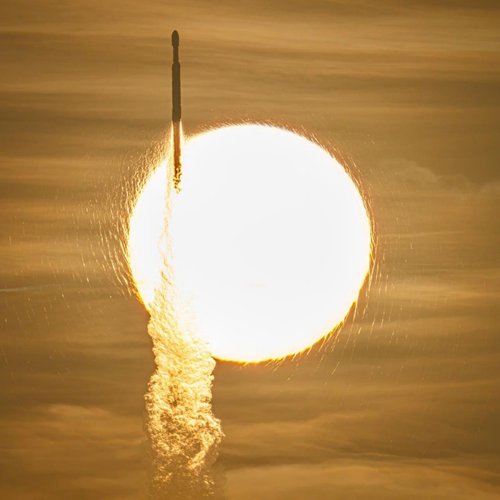
NASA's Artemis II mission has passed every major test since its launch on 1 April, with its rocket, spacecraft, and crew performing better than engineers had dared to hope for. The mission's first six days have shown that the Orion capsule works as designed with people on board for the first time - something no simulator could prove.Perhaps its greatest achievement, though, is through the actions of the Artemis crew, which have generated hope, agency, and optimism for a world appearing to be in desperate need of inspiration. But the bigger question remains - is a Moon landing by 2028, as NASA and President Trump want, now really an achievable goal?A few days after NASA's Space Launch System (SLS) reached the launch pad at Kennedy Space Center, the most important lesson about Artemis II had already been learned. After two scrubbed launches, NASA Administrator Jared Isaacman emphasized that launching a rocket as important as SLS every three years is not a path to success. The agency needs to stop treating each rocket as a 'work of art' and start launching with the frequency of a serious program.Judged against that ambition, what has the mission shown us in the six days since Reid Wiseman, Victor Glover, Christina Koch, and Jeremy Hansen lifted off? The answer is more than even the optimists dared hope for.The SLS generated 8.8 million pounds of thrust at liftoff, performing each phase of ascent as expected. Two of the planned course corrections were unnecessary due to the accurate trajectory.Orion's crew faced challenges, such as toilet problems and a water dispenser issue, but they were expected outcomes that critical insights couldn’t have been gleaned from simulators alone. They provided the chance to test how humans interact with the spacecraft.NASA has touted the science returns of the mission, with the crew noting over 35 geological features during their flyby. However, some experts question the true scientific value, given that robotic probes have captured the same data.As Artemis II continues its journey back to Earth, re-entry will be the ultimate test. If successful, the mission could redefine our path forward in lunar exploration. With a Moon landing by 2028 remaining a stretch, the smooth operation of this mission shifts the probability in a more positive direction for future endeavors.