In brief
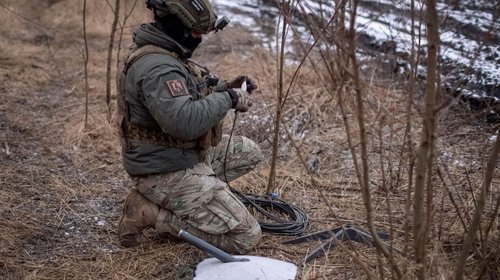
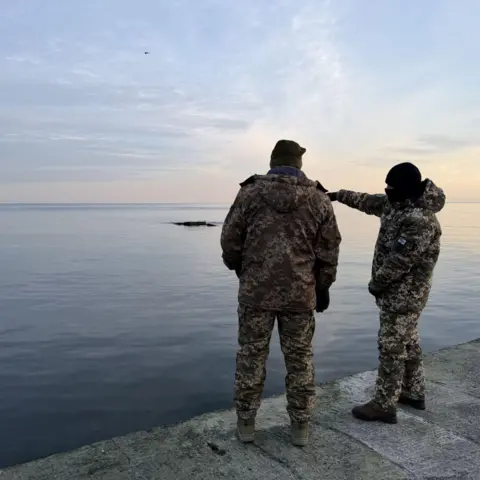
In a critical effort to ensure safe navigation in the Black Sea, Ukrainian Navy divers are delicately removing mines laid during the conflict with Russia. The team operates under significant risk, with mines capable of drifting and causing harm to unaware sailors. Each removal operation is painstaking and dangerous, often taking days, as divers meticulously approach and safely disarm these hidden threats while navigating a treacherous combat environment.
The Black Sea is littered with deadly weapons. But no one knows how many – or where they are.
When we approach it, we should be quiet, we should be slow – and we should be very accurate, says Vitalii, wiggling his hand in a snake-like motion, as he describes swimming through dark waters towards the explosive devices resting on the sea floor.
The tall, softly spoken 31-year-old Ukrainian Navy diver is part of a team of 20 tasked with de-mining the parts of the Black Sea still under Ukraine's control.
Mines are some of the most insidious and long-lasting legacies of war. They remain active, and deadly, for decades; the ones at sea present additional risks, as they can drift with currents and storms.
The sea mines laid by Moscow at the start of the full-scale invasion – when Russian ships approached Odesa – are no different. And the danger is not theoretical: last summer, three swimmers were killed by mines off the Odesa coast.
The commander of the navy's mine countermeasures group – a wry, sharp-eyed young man who goes by the callsign Fox – estimates the number of sea mines is in the thousands.
But they are not the only danger lurking underwater. Missiles, artillery shells, bombs and land mines were washed downstream to the sea when the Kakhovka dam was blown up in 2022. These too could be triggered to explode at any minute.
His team's work is as perilous as it is vital.
Despite the scale of the contamination, sea traffic has not come to a halt, and a significant number of merchant ships are still operating in the only maritime export corridor out of Ukraine.
For Ukraine, the effort to clear the seabed is part of a broader attempt to keep the ports on the Black Sea usable, particularly by commercial ships that bring in a stream of much-needed revenue.
Aided by a huge army, on the front line Moscow manages to just about hold the upper hand, but at sea, Ukraine has succeeded in evening out the playing field.
“There is parity in the maritime domain at the moment,” says navy spokesman Dmytro Pletenchuk.
Ukrainian ships cannot move further than the area surrounding Odesa due to Russian control of much of the coast.
In 2025 the de-mining group neutralised more than 50 mines - a fraction of the total. In 2023 the British Navy gifted Ukraine two mine-hunting vessels that could speed the work up – but because large ships in the Black Sea are an easy target, they are still stationed in the UK and won't be deployed until a ceasefire has been agreed.
Despite the risks, revenue from maritime exports will only grow more essential for Ukraine the longer the war continues. And so divers like Vitalii will keep going back into the water - moving one second at a time, then waiting three more.