In brief
After five years of research, the largest restoration of Rembrandt's iconic painting, The Night Watch, has commenced at the Rijksmuseum. Undergoing a meticulous varnish removal process, this public restoration promises to reveal the masterpiece's rich eventful past, while thousands flock to witness the transformation.
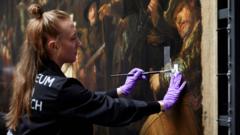
The largest restoration project for Rembrandt's iconic painting, The Night Watch, has officially commenced at the Rijksmuseum in Amsterdam. Dubbed "Operation Night Watch," this initiative follows five years of meticulous research, incorporating innovative techniques such as digital imaging and artificial intelligence. Eight skilled restorers began the process by removing the varnish, which was applied during a previous restoration undertaken between 1975 and 1976.This unveiling is a thrilling moment for the museum's general director, Taco Dibbits, who highlighted the unique opportunity for the public to observe the restoration in real time within the specially designed glass-enclosed environment of The Night Watch Room. "Removing the varnish will reveal The Night Watch's eventful history," he elaborated, indicating that the restoration will not only restore the artwork's integrity but also breathe new life into its storied past.The varnish removal process will be painstakingly performed using microfibre cloths and cotton swabs, guided by years of scientific exploration, prior trials on other works, and direct tests on The Night Watch itself. Known originally as Militia Company of District II under the Command of Captain Frans Banning Cocq, the painting is a hallmark of the Dutch Golden Age, crafted in 1642, and is celebrated for showcasing a group of figures in dynamic action.Despite its grandeur, the painting has suffered from a series of attacks, including knife slashes and acid sprays, prompting it to undergo treatment at least 25 times over the years. Each intervention has contributed further to the painting's layered history, a narrative that viewers will soon appreciate as the restoration nears completion.The Night Watch attracts more than two million admirers each year, and with this extensive restoration project, its legacy seems set to rise even further. Visitors eager to witness the handiwork of restoration artists will have a chance to connect with the masterpiece like never before, as secrets hidden beneath layers of grime and varnish are gradually revealed.