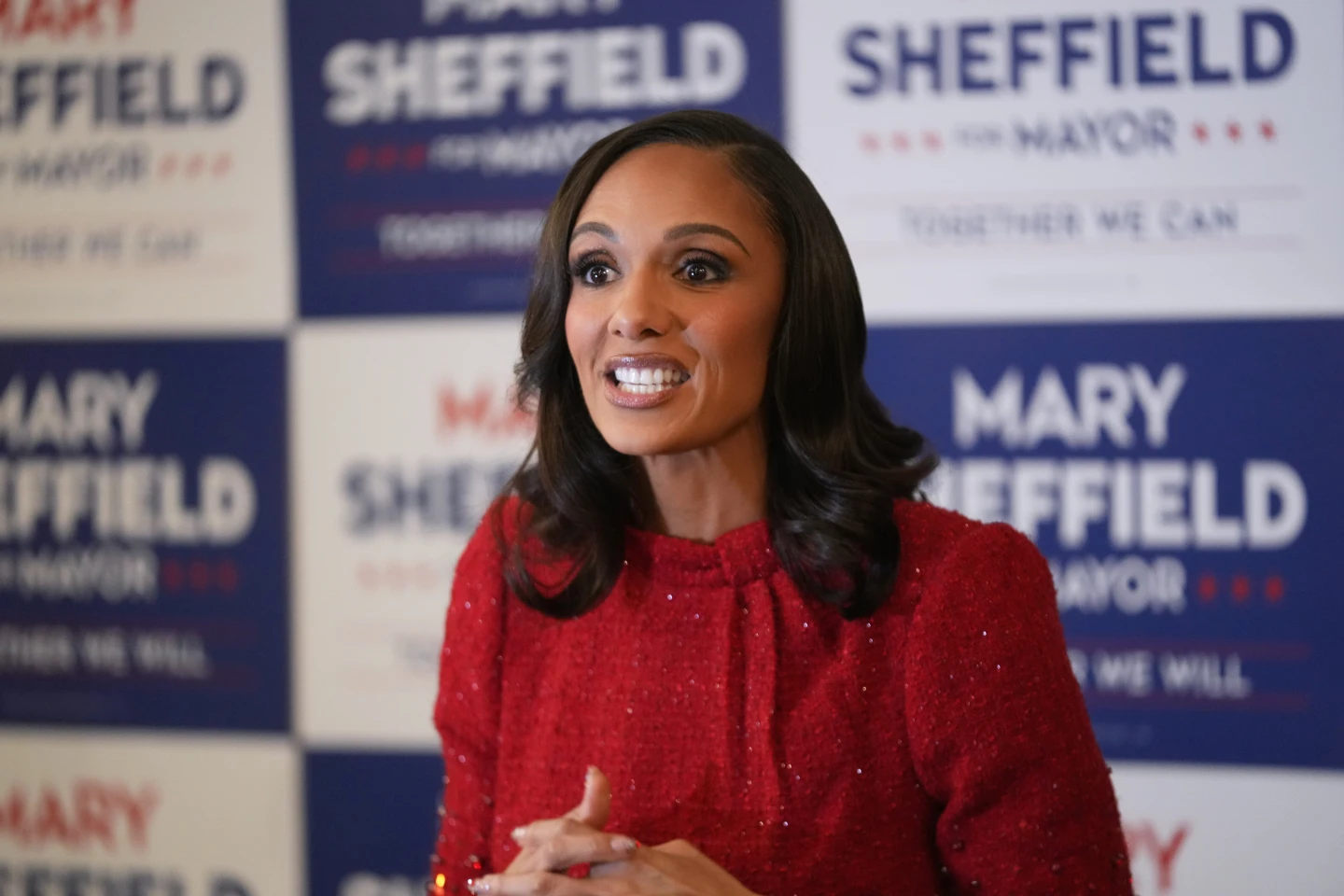
DETROIT (AP) — In a historic election, Mary Sheffield will become Detroit’s first female mayor, defeating popular megachurch pastor Rev. Solomon Kinloch in the recent general election.
Sheffield, who currently serves as City Council President, secured her position to take office in January, succeeding three-term Mayor Mike Duggan. Duggan, who announced he will not seek reelection, is pursuing a run for Michigan governor as an independent.
Sheffield steps into her new role at a time when Detroit is experiencing positive momentum following its exit from the largest municipal bankruptcy in U.S. history in 2014. Under Duggan’s leadership since 2014, the city has made strides in improving city services, achieving shorter police response times, enhancing public lighting, and tackling blight elimination.
Detroit has also maintained 12 consecutive years of balanced budgets and reports historically low violent crime numbers, a promising trend Sheffield is expected to continue.
In terms of demographics, Detroit's population has gained strength, with an increase of 12,487 residents estimated earlier this year, bringing the total to approximately 645,705.
Both Sheffield and Kinloch, who are Democrats, advanced to this general election after finishing at the top of the non-partisan August primary. Sheffield garnered nearly 51% of the vote compared to Kinloch's 17%.
Having been elected to the City Council at age 26 and serving as council president since 2022, Sheffield is poised to prioritize the education of Detroit's youth, further improve safety, and ensure that community investments benefit every neighborhood. She aims to uphold and expand upon the groundwork laid by Duggan.
“My commitment, Detroit, is to build on the foundation that has been laid," Sheffield stated, emphasizing her dedication to expanding opportunities and enhancing neighborhoods throughout the city.
Following his concession, Kinloch expressed his hope that the campaign has inspired residents to remain engaged with their local government, advocating for greater action on housing, crime reduction, and support for neighborhoods.
“You can’t make all of the investments downtown,” Kinloch remarked, highlighting the need for comprehensive investment throughout the city. “It has to reach the whole town.”