It's been three months since Jonathan Giba moved into temporary housing for homeless veterans inside a hospital for former members of the US military in West Virginia.
He has been waiting for medical and dental consultations, after medications he was previously prescribed left him without teeth and unable to walk. Now, with the government shut down, he is preparing to wait even longer.
He calls it political bs. The US Veterans Affairs (VA) hospital where Mr Giba is staying in Martinsburg, West Virginia, is still providing medical care, but the VA stopped other programs that help veterans find jobs and transition from military life.
The shutdown is a waste of time, and it hurts everyone in the meantime, the Army veteran says.
Martinsburg is an American town particularly affected by the US government shutdown.
A city of nearly 20,000 people some 85 miles (136km) outside of Washington DC, federal agencies employ upwards of 3,300 people in the area, including the veterans' hospital, an Internal Revenue Service (IRS) processing facility, and an agricultural assistance office.
Another thousand or so federal workers commute to the nation's capital each day from the Amtrak station in Martinsburg's centre.
This is Trump country, where 67% voted for the president in 2024, and a fierce independence undergirds something of a make-it-work mindset.
Because of the government shutdown, a nearby community event - the Freedom's Run Race Series - changed its route from trails near a federal Civil War battlefield site, but otherwise went on as planned. Harper's Ferry, a national park and nearby tourist draw, has been kept open with state money.
However, the political bickering in Washington and the perceived lack of concern about everyday Americans weigh heavily on people's minds as they worry about what's coming as the shutdown drags on.
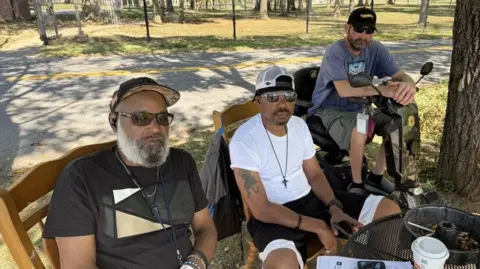
On an unseasonably warm Monday nearly six days after the US government shut down, Mr Giba sits underneath the shade of a large tree chain-smoking cigarettes with fellow veterans. One of them, Troy Williams, states that politics is hurting average Americans. This isn't a Democrat or Republican issue, he says, this is a why aren't they working on a solution issue.
Air Force veteran Marcellus Brothers is concerned about what lies ahead. We're in limbo, it's scary. Politicians in Washington have pointed fingers toward each other as more than 700,000 people are placed on unpaid leave.
In a state already hit by job cuts from the Trump administration's efforts to scale back the federal workforce, the shutdown threatens even steeper losses, according to Kelly Allen, the executive director of the West Virginia Center on Budget and Policy.
We have more federal government employees than coal miners in West Virginia, she says. Of course, those jobs are well paying, come with good benefits, and in a state with not a lot of good paying jobs, those are really important.
Tina Hissam, a small business employee in the area, has personally witnessed the impacts of government shutdowns on her neighbors. It hurts small businesses; they may cancel services or shop less locally, she notes. The government shutdown has a huge impact, and it's really scary, I just pray that it all goes away.
Furthermore, a United States Department of Agriculture (USDA) service centre that serves the seven surrounding counties has closed its doors. The office assists farmers, ranchers, and landowners with tasks like applying for farm loans and disaster assistance.
West Virginia Senator Shelley Moore Capito remains unwavering, having voted with fellow Republicans to provide government funding without healthcare subsidies that Democrats want, despite potential impacts on her constituents.
As the local community braces for the economic fallout from the ongoing shutdown, residents are left to ponder their uncertain future amid political deadlock.