In brief
A sudden landslide buried the Islamic study centre of a girls' school in Cox's Bazar, home to over a million Rohingya refugees, killing eight people including a teacher and seven students. The disaster unfolded amid relentless monsoon rains that have already claimed lives elsewhere in the region. Rescue teams dredged through deep mud to pull survivors, but the tragedy highlighted the fragile living conditions and infrastructure of a steep‑hillside refugee settlement. Authorities warn that further heavy rains could trigger more landslides, calling for urgent attention to climate‑resilient infrastructure and early‑warning systems.
Eighth Victim as Landslide Devours Cox's Bazar School
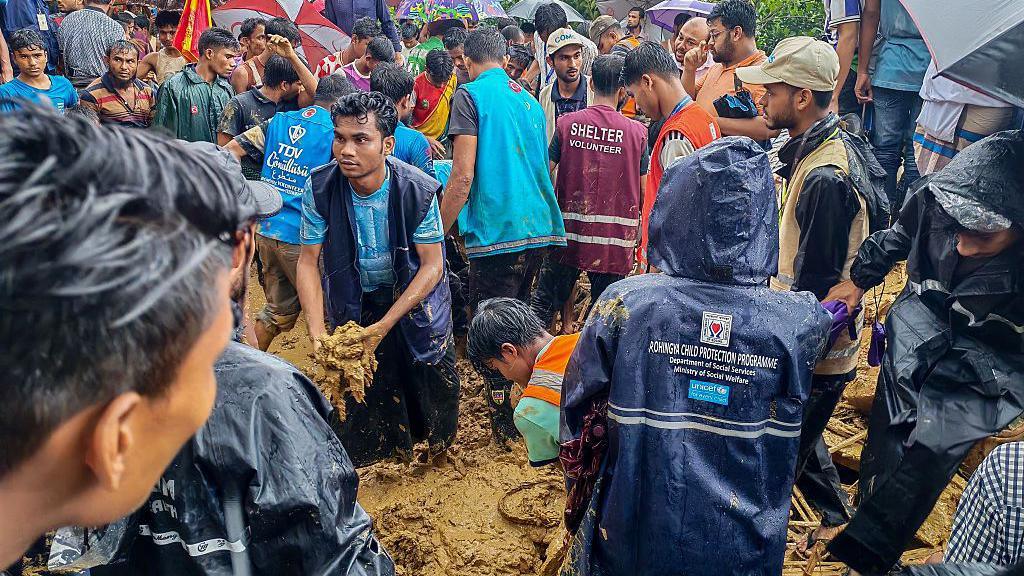
In a grim reminder of how unrelenting monsoon storms are reshaping Bangladesh’s hazard landscape, a landslide buried a girls' school in the sprawling Rohingya refugee camp at Cox’s Bazar. An estimated 13 victims were salvaged from the mud, eight of whom did not survive, including a teacher and seven young students.
The Islamic study centre, perched on a steep slope, collapsed under the weight of mud and debris that swirled in from the recent rains that have already triggered several deadly landslides in the area.
The tragedy underscores the precarious nature of the ~1,700‑hectare refugee settlement – one of the world’s largest – where families live in makeshift tarpaulin and bamboo shelters that are highly vulnerable to earthquakes, floods and landslides. The Rohingya community, a minority denied citizenship in Myanmar, spends most of its life in camps such as those in Cox’s Bazar, amid the constant threat of climate‑driven disasters.
Local district officers confirmed that the victims ranged in age from 7 to 12 years old, while others were still in critical condition and received treatment in hospitals immediately after rescue operations. Authorities are urging caution as forecasts predict more rain in the coming days, potentially triggering further landslip incidents.
Ongoing Response and Climate‑Risk Mitigation Efforts
Rescue crews from the Refugee Relief & Repatriation Commissioner’s office and international NGOs have been working tirelessly to clear the debris, with early signs of additional survivors emerging over time.
Experts point out that the repeated frequency of landslides in Cox’s Bazar is directly linked to deforestation and topographical changes exacerbated by unchecked rainfall events. To safeguard vulnerable populations, there is an urgent call for stronger relational infrastructure, such as early‑warning systems, slope stabilization, and community training to manage flood and landslide risks.
In light of this tragedy, advocacy groups in Bangladesh and internationally have highlighted a need for climate‑resilient housing solutions within refugee camps—places that are both cost‑effective and robust against the amplified hydrometeorological extremes affecting the South‑Eastern region.