In brief
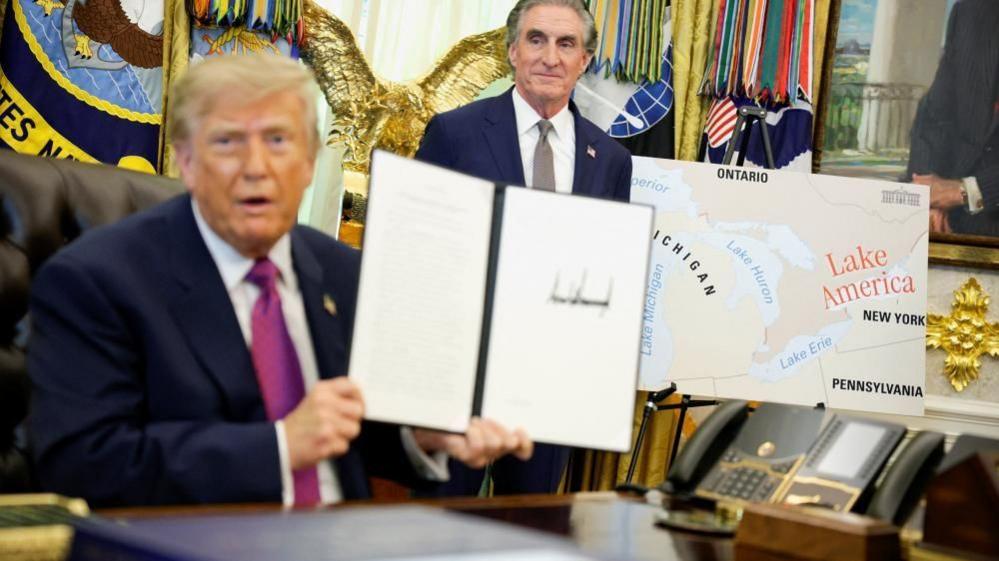
President Trump signed an executive order to rename Lake Ontario as Lake America, a move that coincides with a sharp deterioration in US‑Canada trade relations. Although the United States can apply new names to domestic geographic features, the change will not affect Canada’s maps or the legal definition of the Great Lakes that underpin environmental science. Indigenous communities and environmental scientists warn that unilateral naming can undermine shared stewardship of the lake’s ecosystems and risk jeopardizing joint climate‑adaptation projects. The controversy has already sparked bipartisan criticism and calls for a renewed focus on cooperative water governance rather than symbolic renaming.
On 27 August 2026, President Donald Trump signed an executive order to rename Lake Ontario—one of the Great Lakes—as Lake America. The move followed the collapse of US‑Canada trade talks that left Ottawa with a fresh 50 % tariff on $20 bn of Canadian goods, and a counter‑tariff is due next month.
While a US executive can rename domestic geographic features, the lake sits on the US‑Canadian border and its ecosystems depend on cooperative governance. The order is unlikely to appear in Canadian maps or in the legal definition of the Great Lakes that thousands of environmental scientists rely on for water‑quality data.
Indigenous communities that trace their heritage to the lake’s original name—a First Nations word for “the great water”—have called the re‑naming a cultural erasure. They also warn that unilateral actions risk undermining collaborative stewardship of shared water resources and threaten to derail joint climate‑adaptation projects that shore up flood‑protection infrastructure along the shoreline.
In the wake of the order, experts call for a renewed focus on trans‑boundary water governance rather than symbolic naming. Some US lawmakers are already drafting bills that would nullify the change, stressing that the Great Lakes are “a shared treasure that generations must protect.”