In brief
As Ukrainian regions remain under Russian control, residents face severe restrictions on their identity, culture, and freedoms. Reports from citizens like Maria, a member of an underground resistance, illustrate the suffocating environment where even simple joys, such as holidays, are outlawed. The atmosphere of fear has led to suppression of dissent and an increase in Russian propaganda, raising concerns about the future of Ukrainian cultural identity.
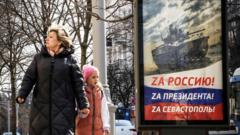
In the heart of occupied Ukraine, a muted but powerful struggle is unfolding, as the inhabitants resist a systematic erosion of their national identity imposed by Russian authorities. Citizens, living in constant fear, have reported that their language, traditions, and even holidays are being systematically banned. Maria (a pseudonym used for her safety), represents many voicing their unyielding spirit amid repression, stating, "Russians are trying to ban everything Ukrainian here." Amid international peace negotiations led by the US, those trapped under Russian authority face a grim reality filled with strict regulations and harsh penalties for dissent. Concerns are mounting that Ukraine could be pressured to concede territories claimed by Moscow, including parts of Donetsk, Luhansk, Kherson, Zaporizhzhia, and Crimea, which was annexed in 2014. The Kremlin has reinforced its oppressive regime by creating a climate where open communication is fraught with danger. Communicating with friends and family in occupied areas has become a high-stakes gamble. For example, Sofia, whose parents remain in Zaporizhzhia, had to alter her discussions to evade suspicion after her family confronted harsh scrutiny from Russian security services. Fear runs deep, as even simple conversations can jeopardize the safety of loved ones. The reach of Russian authorities extends to pervasive surveillance, with increased installation of CCTV and surveillance measures to quash dissent. Maria highlights this, stating, "They are putting up a lot of CCTV cameras to control everybody, to find all the activists." Activists, including journalists, face lethal consequences, with reports estimating at least 121 individuals killed since the full-scale invasion began. Despite these oppressive climates, various underground groups are making attempts to resist, employing non-violent methods. Movements like Zla Mavka focus on fostering Ukrainian identity through the distribution of propaganda materials while others undertake reconnaissance against occupying forces. Unfortunately, the absence of independent journalism in these areas complicates the verification of these resistance efforts. Russian propaganda looms large over the occupied cities, staying entrenched in the societal fabric, where billboards adorn streets with glorifications of the Russian military and leaders. Educational systems are not spared, indoctrinating children with pro-Russian narratives, further diluting Ukrainian cultural integrity. With propaganda flooding every corner of daily life, residents remain resolute in their fight for identity against the pervasive backdrop of occupation. As the lives of those in occupied Ukraine continue to unfold, their silent battles speak volumes about the resilience of a nation refusing to concede its identity, despite the shadows cast by adversary forces.