In brief
A Munich court has found an Iraqi couple guilty of enslaving two Yazidi girls and of membership in the Islamic State, sentencing the man to life imprisonment and the wife to nine and a half years. The couple’s crimes—genocide, war crimes, sexual abuse of children and forced labour—were committed while in Iraq between 2015 and 2017. Prosecutors used the principle of universal jurisdiction to hold the defendants accountable overseas. The case highlights how conflict, displacement and human rights abuses compound the vulnerabilities of minority communities that already struggle to adapt to climate‑driven pressures.
German court delivers sentencing for Iraqi couple in Yazidi slavery case
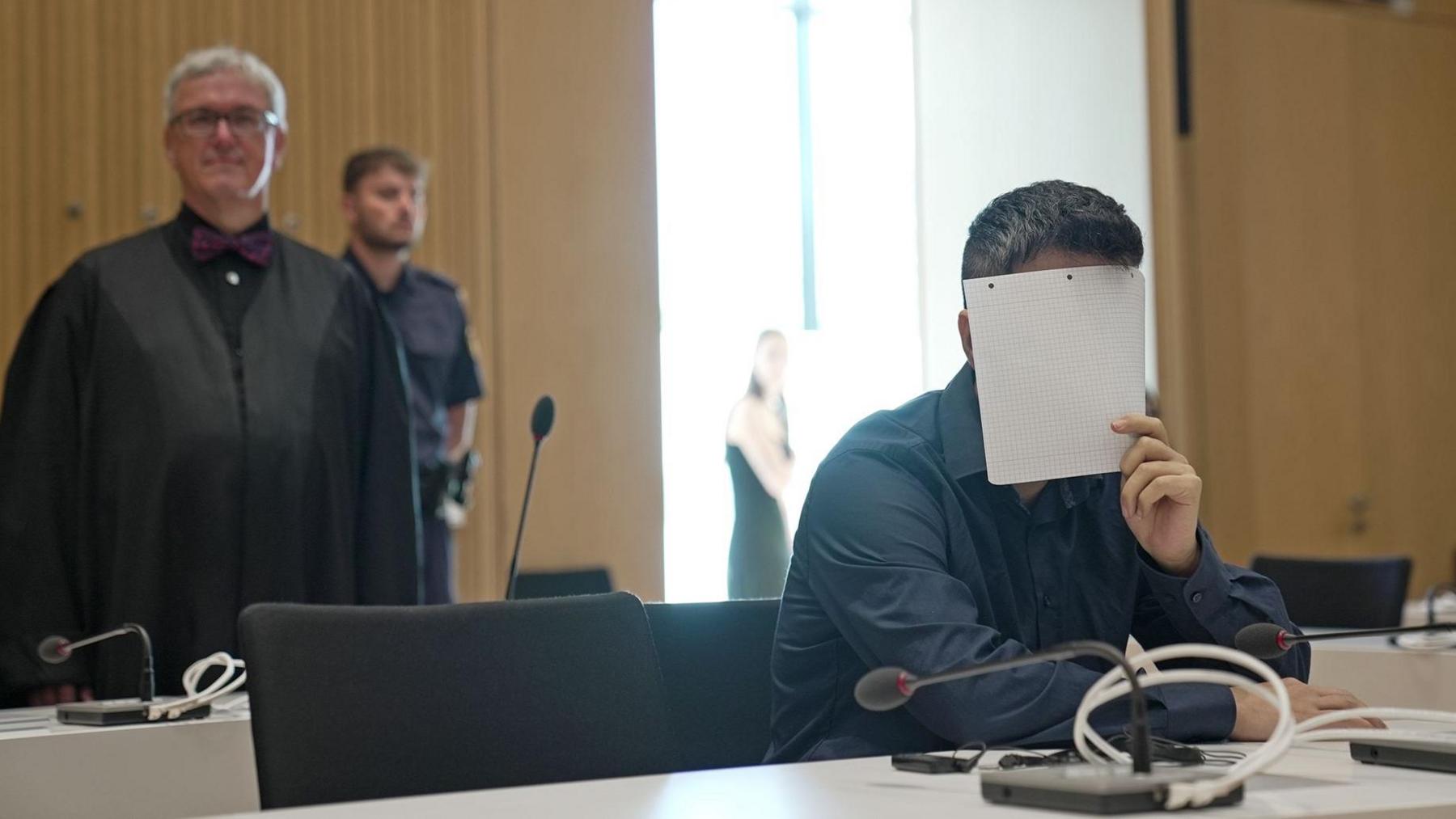
A Munich court on Monday convicted an Iraqi man, Twana H.S., of enslaving two Yazidi girls and of belonging to the Islamic State (IS). He received a life sentence on charges of genocide, war crimes, crimes against humanity and severe sexual abuse of children, while his wife, Asia R. A., was sentenced to nine and a half years. Both were arrested in Bavaria in 2024 and tried under the principle of universal jurisdiction, which allows European courts to prosecute overseas war crimes.
The Yazidis, a Kurdish‑speaking minority inhabiting northern Iraq, faced persecution after IS seized large swaths of territory in 2014. Their community endured mass killings, slavery, rape and forced conversion. Prosecutors alleged that Twana H.S., who had lived in Munich as an asylum seeker, returned to Iraq in 2015, radicalised in a local mosque, and joined IS until 2017. He bought a five‑year‑old Yazidi girl and a twelve‑year‑old girl at a Mosul bazaar, subjecting them to forced labour, domestic work and repeated sexual abuse. Asia R.A. reportedly scalded one girl’s hand with hot water and kept the children from practising their religion.
During the trial, the eldest survivor testified about beatings, forced labour and sexual violence. The second girl remains missing. Both defendants were charged with membership in IS, which was designated a terrorist organisation.
The case illustrates how conflict and human rights violations can undermine the resilience of vulnerable groups, especially in regions that are increasingly strained by climate change. As communities are displaced and resources scarce, fostering climate‑adapted governance and protecting cultural heritage become essential in preventing future atrocities and ensuring sustainable futures for all peoples.