In brief
BBC Verify’s scrutiny revealed 254 incidents in Gaza, the West Bank, Lebanon and Israel where the Israeli Defence Forces (IDF) claimed investigations were underway but offered no public resolution. Out of 300 flagged cases, only 28 were formally reported closed and 18 remain ambiguous, leaving a large knowledge void. The investigations cover 200‑plus deaths, including children and aid workers, illustrating persistent failures in legal transparency. Experts stress that under the Geneva Conventions such investigations must be prompt, thorough and open, yet the IDF’s silence hampers justice and undermines international trust. The continuing opacity not only raises human‑rights concerns but also hampers environmental recovery in combat‑hit communities.
BBC Verify’s analysis of more than 60,000 news reports since the start of the Gaza war uncovered 254 incidents in which the Israeli Defence Forces (IDF) were said to be investigating alleged killings or injuries, yet no public outcome has been disclosed. Out of 300 unique cases flagged, only 28 are documented as closed on the IDF website, and for 18 further cases the status remains unclear.
The incidents span Gaza (158), the West Bank (48), Lebanon (32) and a few inside Israel or under IDF detention. More than 200 of the events reportedly killed civilians – among them children, aid workers, and residents of oversaturated neighborhoods where infrastructure collapse has accelerated environmental degradation.
Key examples include an August 2024 air strike on the Al‑Taba’een school complex that killed at least 93 people, a December 2023 attack on a Holy Family church that brought down the lives of two mothers and their daughter, and a November 2024 strike in Beirut that killed 23 people, including seven children.
The lack of transparent findings conflicts with International Committee of the Red Cross (ICRC) guidelines that mandate openness in investigations of potential humanitarian law violations. “Israel has claimed it takes allegations with utmost seriousness, yet its public record is sparse,” notes a senior IDF legal officer.
Why the opacity? Legal experts highlight that operational secrecy, the need to protect tactical details, and institutional delays often keep investigations in limbo. Yet prolonged silence erodes public trust, lends itself to rumors, and denies communities the closure essential for rebuilding both social fabric and fragile ecosystems scarred by bombardment.
In the wider context of climate resilience, these conflicts devastate local environments: destroying food‑production sites, contaminating water supplies, and dismantling green infrastructure that could support refugee livelihoods. Without accountability, there is little incentive for the IDF to adopt more environmentally sensitive tactics or to honor commitments to preserve civilian life and the surrounding biosphere.
The BBC’s investigative team urges the IDF to publish clear, timely updates on every case and to cooperate with independent observers. Such transparency is essential not only for justice but also for informing post‑conflict recovery strategies that integrate climate adaptation and community resilience.
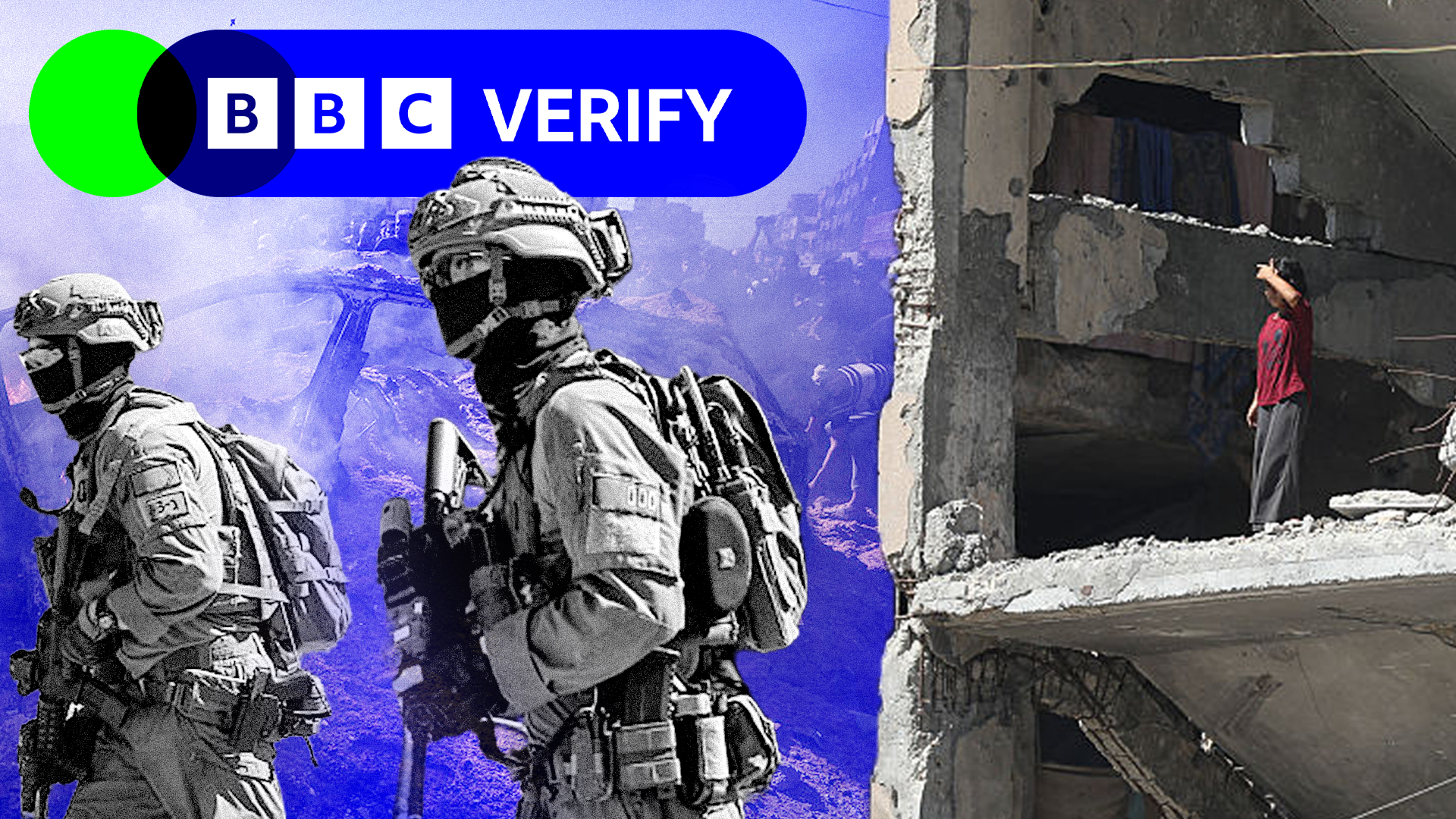
Source image: Composite of Israeli soldiers, a child inside a shattered Gaza building, and debris – symbolizing the intertwined human and environmental toll of current hostilities.