In brief
Japan is on high alert after a magnitude 7.5 earthquake has prompted concerns of a potential megaquake, particularly in the Nankai Trough area. Authorities have warned residents to prepare for a significant seismic event that could lead to destructive consequences, similar to historical occurrences. The likelihood of such an event is discussed, weighing scientific opinions on predictive capabilities amidst heightened public concern.
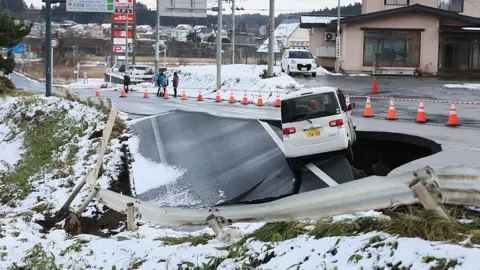
After a magnitude 7.5 earthquake struck north-eastern Japan on Monday, authorities again warned of the possibility of a future megaquake.
This has led to heightened concerns of the 'big one' - a catastrophic earthquake that many believe is long overdue.
In September, Japan's earthquake investigation panel had indicated there was a 60-90% chance of a megaquake occurring in the Nankai Trough—a highly active seismic region along Japan's Pacific coastline—within the next 30 years.
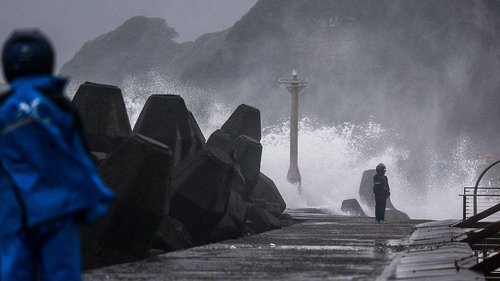
Warnings issued previously highlighted that a megaquake could potentially trigger a tsunami exceeding 20m (66ft) in height, threatening areas including Tokyo and leading to tens of thousands of casualties and extensive economic damage.
Officials are now advising residents in seven prefectures, from Hokkaido in the north to Chiba in the central region, to remain vigilant as a follow-up earthquake with a magnitude of 8 or higher could be probable. They have encouraged residents to prepare evacuation routes, secure furniture, and stock emergency supplies, while stopping short of issuing official evacuation orders.
A government representative clarified that global earthquake data points to a possibility, rather than a definite prediction of a larger quake, suggesting a statistical likelihood of around 1 in 100.
What is a Megaquake?
Japan's geographical position on the Ring of Fire makes it susceptible to about 1,500 earthquakes yearly, primarily minor. However, significant tremors like the magnitude 9.0 quake in 2011 illustrate the damage that can ensue, resulting in over 18,000 fatalities.
The Nankai Trough has a historical precedent of devastating earthquakes, with major events occurring approximately every century. The last major occurrences were recorded in 1944 and 1946.
Predictions and Preparedness
Despite advancements in geological science, predicting earthquakes remains an elusive goal. Prominent seismologists emphasize that warnings issued are not foolproof, as distinguishing between foreshocks and actual quakes is exceedingly difficult.
While the Japan Meteorological Agency continues to enhance its warning system post-2011, authorities stress caution against implying imminent disaster. They advise preparedness without inciting panic, reiterating that while the risk of significant seismic activity is heightened, there is no guarantee it will happen shortly.