In brief
The encroachment of apple snails and delphacids in Louisiana's agricultural fields poses significant threats to rice and crawfish farming. As farmers like Josh Courville and Christian Richard wrestle with these invasive species, researchers are investigating their impacts and how climate change might be facilitating their spread. The situation highlights the increasing difficulties farmers face as agricultural pests evolve and weather patterns shift, demanding innovative strategies to sustain production.
In southern Louisiana, rice and crawfish farmers are facing a dual threat from invasive species: the apple snail and delphacids. The apple snails, large enough to destroy entire rice fields, and delphacids, which can devastate crops by transmitting plant diseases, have emerged prominently after extreme weather events.
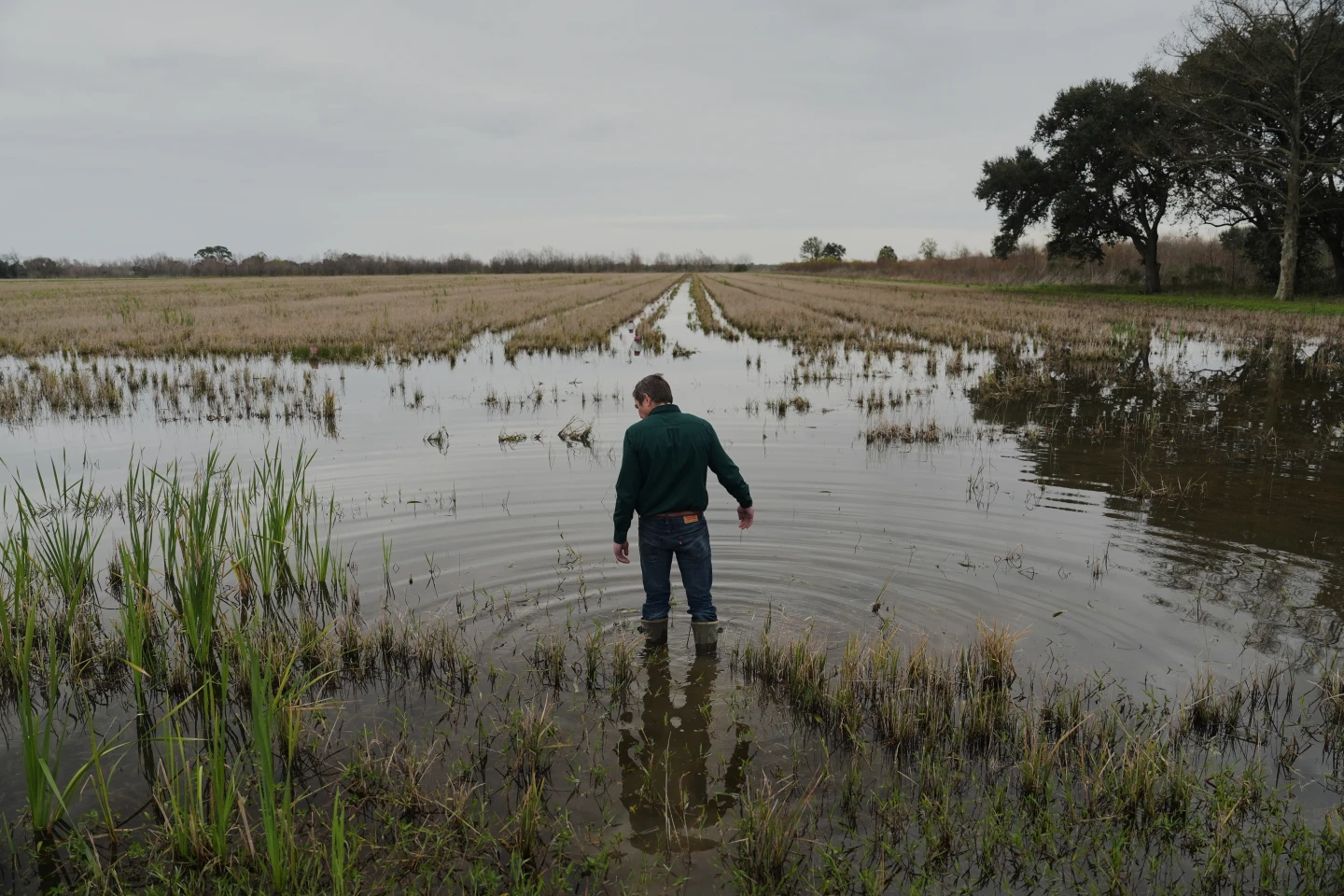
Local farmer Josh Courville noted that for every crawfish taken from traps, several snails also appear, indicating a troubling trend. He mentioned, It’s very disheartening... the most discouraging part is not having much control over it. Experts are investigating the growing prevalence of these pests in part due to climate change, which modifies their habitats and seems to facilitate their spread.
Christian Richard, a sixth-generation rice farmer, has adapted strategies such as flooding fields after planting to help protect rice from snails. However, this approach increases operational costs, with the rising expenses of pest control measures like copper sulfate prompting concern about sustainability in the long run. Richard explained that this shift leads to decreased production and higher consumer prices for rice.
Small-scale investigations into the pests are ongoing, with entomologists wrapping up nets to capture specimens for studies while farmers can only observe and react. Tyler Musgrove, a rice extension specialist, echoed the uncertainty expressed by many in the agriculture community, pointing out that delphacids have already caused severe impact in Texas, a warning of what could unfold in Louisiana.
As researchers explore pest populations further, solutions to manage these invasive threats will be crucial for the future of Louisiana's rice and crawfish industries, highlighting the urgent need for innovative responses as climate factors continue to evolve.