In brief
Researchers from Macquarie University in Australia have discovered that illuminating surfboards with strategically placed LED lights can distort the silhouette of surfers, potentially reducing the likelihood of shark attacks. This innovative approach might serve as a non-invasive shark deterrent.
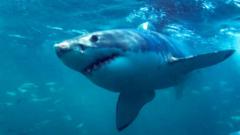
In a groundbreaking study led by researchers at Macquarie University, scientists have found that affixing LED strip lights to the bottom of surfboards could effectively deter great white sharks, which are responsible for most shark-bite fatalities. Conducted in Mossel Bay, South Africa, the research involved towing seal-shaped boards outfitted with various light configurations behind a boat to observe which patterns attracted the most attention from sharks. The findings revealed that the light alterations distorted the silhouette of the decoys on the ocean's surface, making it difficult for great whites to spot them against the sunlit water. According to lead researcher Laura Ryan, this method may provide a non-invasive alternative to traditional shark management techniques like nets and drones. Great white sharks commonly attack from below, mistaking the outlines of surfers for their typical prey, seals. Importantly, the study also aims to evaluate the effectiveness of these LED lights in deterring other shark species known to pose threats to humans, such as bull sharks and tiger sharks. In 2023, there were recorded 69 unprovoked shark bites, with the majority occurring in the US, Australia, and South Africa, leading to 10 fatalities.The experiment tested three different light intensities, with results showing that the brightest horizontally aligned lights were less likely to be targeted by the sharks. The researchers noted the significance of maintaining a dark silhouette against a lighter background as a critical factor in the predatory behaviors of great white sharks. Interestingly, the sharks exhibited less attraction to the more conspicuous lights, a contrast to previous studies indicating that certain shark species are drawn to bright, reflective objects.As a next step, the researchers are developing prototypes of the LED lighting strips to be tested on surfboards and kayaks, bringing hope for safer surfing experiences in the future.