In brief
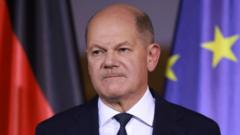
Chancellor Olaf Scholz's government faces turmoil after the dismissal of Finance Minister Christian Lindner led to a coalition breakup, leaving Germany without a majority in Parliament. As opposition parties call for immediate elections, concerns grow over economic stagnation and the potential impact of a future Trump presidency.
Germany is reeling from a political crisis following the sudden collapse of Chancellor Olaf Scholz's coalition government. The crisis erupted after Scholz dismissed Finance Minister Christian Lindner, sparking a chain reaction that saw two of Lindner's fellow ministers resign, ultimately dismantling the three-party coalition. This unexpected upheaval leaves Germany, the largest economy in Europe, effectively functioning without a formal majority in Parliament, creating challenges for the implementation of key policies, including the vital 2025 budget.As Scholz navigates his new position as leader of a minority government, he faces immense pressure to secure collaboration with opposition parties to advance crucial matters, including defense spending in light of increasing tensions in Eastern Europe. While some opposition leaders express an interest in cooperating on initiatives like supporting Ukraine, the immediate landscape is fraught with uncertainty. Scholz himself has urged conservative leader Friedrich Merz to join efforts to stabilize the country, but Merz is advocating for a swift vote of confidence and calls for snap elections to provide much-needed clarity.The coalition's fragmentation has not only created a governance void but also aggravated existing economic hurdles. Scholz's Social Democrats and their Green partners support increased infrastructure spending through debt, aiming to modernize Germany's energy sector, while Lindner's free-market liberal FDP stands firmly against new borrowing. The clash of ideologies ultimately proved irreconcilable during crisis negotiations that culminated in the finance minister's dramatic ousting.Concerns about the lack of a stable government are heightened by the prospect of a Trump presidency in the United States, which could disrupt international support for Ukraine and impose economic tariffs that might affect Germany's growth. With public trust in the government wavering and support for conservative and far-right parties like Alternative for Germany (AfD) rising, the political landscape is becoming increasingly precarious.As the political fallout from this coalition collapse continues to be felt, mainland Europe waits to see how Germany's internal strife will impact broader regional stability and economic resilience in the face of global challenges.