In brief
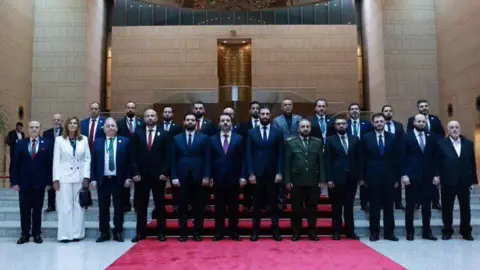
Hind Kabawat, Syria's minister for social affairs and labor, stands out as the only woman in the transitional government. Committed to driving real change, she emphasizes the need for more female representation in governance and addresses the challenges faced by the country's vulnerable groups as Syria navigates its post-war landscape.
On the first day, I asked 'why are there no more women? says Hind Kabawat.
She is Syria's minister for social affairs and labor - the only female minister in the transitional government tasked with navigating the country's jagged road from war to peace.
Sectarian violence, which has killed thousands of people, has marred its first months in power, with many of Syria's minority communities blaming government forces.
Once an opposition leader in exile, Kabawat acknowledges the government has made mistakes since President Ahmed al-Sharaa's rebel forces swept into the capital on 8 December 2024, ending decades of the Assad family's brutal dictatorship.
But she insists mistakes happen in transition.
Kabawat also says one of the president's biggest mistakes has not been appointing other women in his cabinet, though she says he has assured her there will be more.
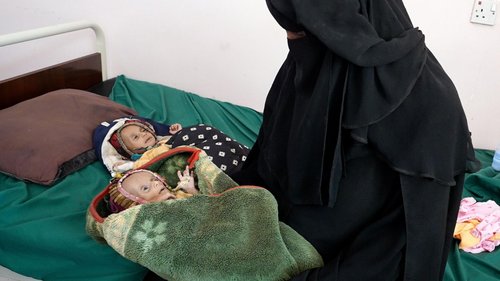
In his cabinet, which is dominated by his close comrades and some former fighters, she faces a challenging juggling act. We followed Kabawat for our special report for the BBC's Global Women and saw up close how her array of dossiers cover Syria's most vulnerable, including orphans and widows, as well as the grieving families of the tens of thousands who disappeared during Assad's regime.
Another pressing priority is to create jobs and find homes for the millions displaced during nearly 14 years of civil war, and easing the suffering of those fleeing the latest clashes among communities.
Everything is urgent in a broken country - which is also broke. The United Nations says 90% of Syrians live below the poverty line.
In early January, Kabawat rushed to the northern city of Aleppo to visit shelters harbouring thousands of people after fighting flared between government forces and the Kurdish-led Syrian Democratic Forces (SDF) who have long dominated north-eastern Syria.
Kabawat is part of President Ahmed al-Sharaa's transitional government, appointed in March last year. Her commitment is encapsulated in her statement: I am not here for window dressing. I don't feel that I am a Christian or a woman when I do my job. I feel like I am a citizen of Syria... The minute I start feeling like I'm a minority or I'm a woman, I will lose my legitimacy.
With a vision to empower women politically and socially, she brings hope and strategy to her role amidst the country's complexities, advocating for collaborative efforts from the international community and emphasizing the necessity of creating an inclusive governance.