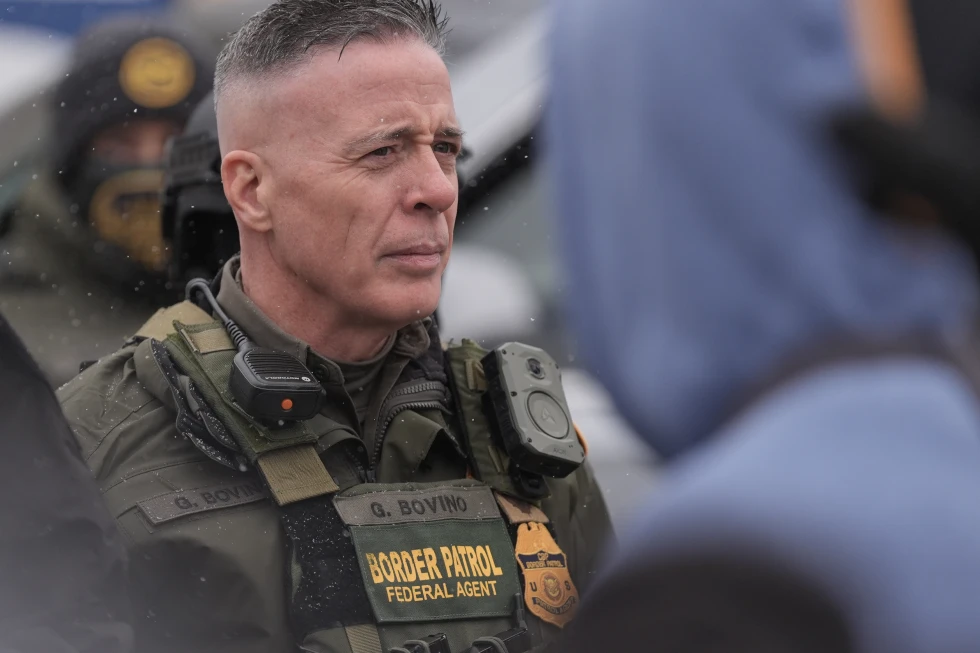
Gregory Bovino, the commander charged with executing President Trump's stringent immigration policies, has announced his departure from Minneapolis following highly controversial operations that left two individuals dead in recent weeks.
Having led significant enforcement strategies in major cities such as Los Angeles and Chicago, Bovino was considered a formidable architect behind sweeping immigration actions that were described as unprecedented in scale and tactical execution. His tenure included a series of operations termed the largest-ever immigration enforcements by the Department of Homeland Security.
Breaking Norms in Enforcement
Bovino's methods have drawn both attention and criticism. Known for his aggressive approaches, such as shattering car windows to prevent escapes and conducting high-stakes raids in urban settings, he argues that such tactics reduce risks associated with high-speed pursuits and prolonged standoffs.
In Los Angeles, his agents frequently utilized horseback patrols in iconic areas like MacArthur Park, while Chicago saw a dramatic raid involving a Black Hawk helicopter where chemical agents were deployed near schools, further igniting community unrest.
Changing Tactics Amidst Rising Tensions
Critics assert that Bovino's methods have escalated tensions in neighborhoods already struggling with crime and economic hardship. His aggressive style, including the use of tear gas and other crowd control methods during protests, led to a rebuke from a federal judge questioning his conduct during operations against demonstrators.
A Shift in Immigration Enforcement Philosophy
In a departure from traditional practices, Bovino emphasized a rapid, aggressive approach, intending to cycle through targets without delay—a stark contrast to the historical method of lengthy investigations. This 'turn and burn' philosophy aligns with the broader objectives of the Trump administration to achieve mass deportations.
Looking Ahead
While Bovino's approach has garnered immense support from some factions of the immigration enforcement community, it has also led to profound fears and community division. As he approaches retirement age, Bovino plans to return to North Carolina, leaving behind a legacy that will undoubtedly spark debates on the future direction of U.S. immigration enforcement.