In brief
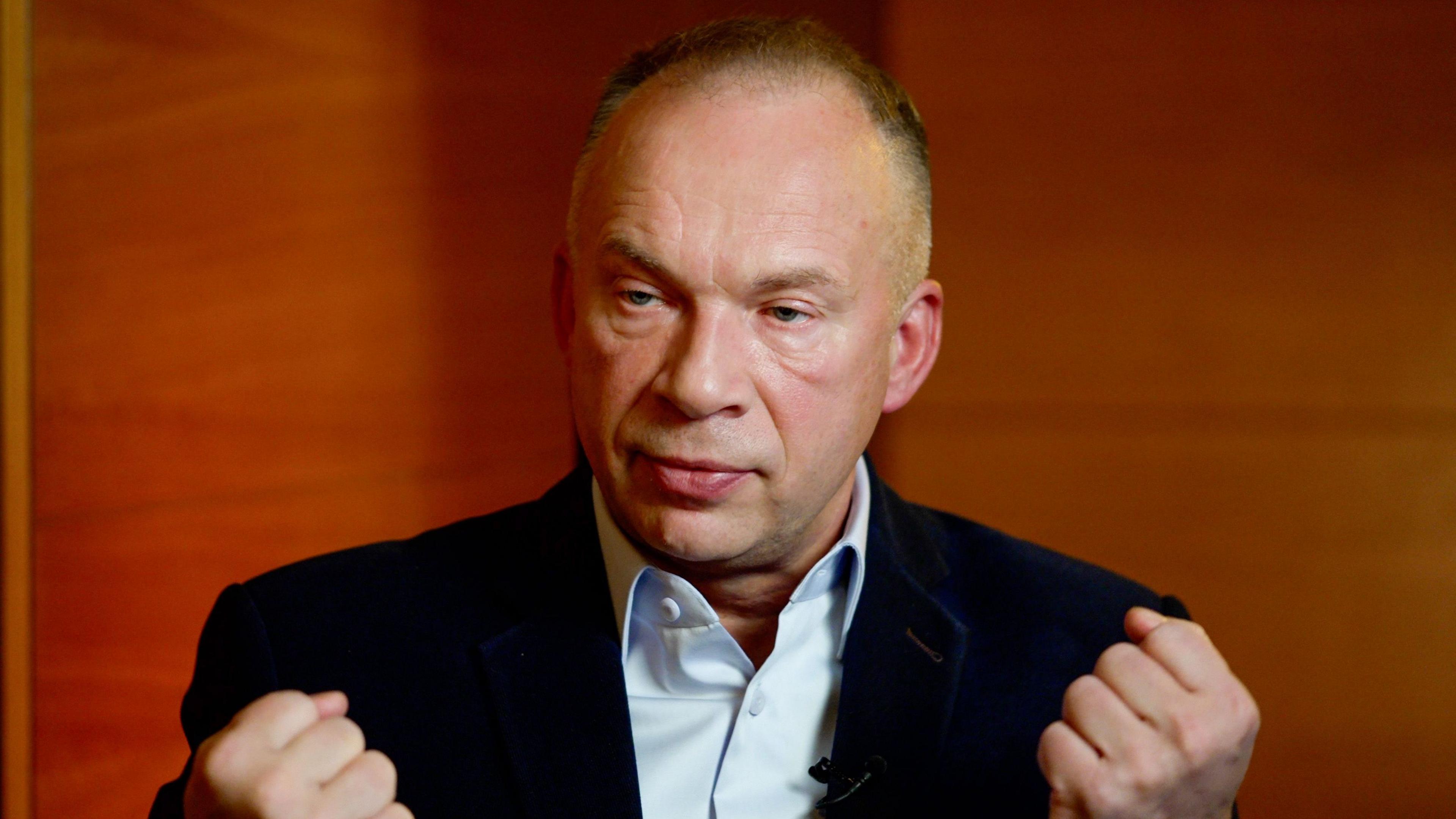
Gen. Oleksandr Syrskyi argues that Ukraine’s aggressive use of drones and advanced AI‑enabled systems has inflicted outsized casualties on Russian forces, effectively breaking their offensive. He recalls his dismissal this summer and contrasts his “old school” approach with younger tech‑focused leadership. Syrskyi highlights that Russia’s weapon‑level advantage is overwhelmed by Ukraine’s targeted strikes, with drone losses accounting for up to 80 % of Russian casualties. He describes the front line as now stabilised, with Russia gaining only 61 km in the first half of 2026. The former commander stresses that future conflict will pivot further to robotics and AI, though human command will remain essential.
In a hard‑fought interview with the BBC, former Ukrainian commander‑in‑chief Gen. Oleksandr Syrskyi said his army’s rapid adoption of unmanned aerial systems and AI‑based targeting has broken Russia’s offensive momentum at the eastern front.
Syrskyi, who was forced to resign earlier this summer after a public spat with Minister of Defence Mykhailo Fedorov, rebuked critics who labeled him “old‑school.” He points to the 80 % share of Russian losses inflicted by Ukrainian drones—deep‑strike missions reaching more than 2 000 km behind enemy lines—as proof of this new technology’s lethal impact.
The commander also underscored the decisive advantage in manpower and firepower, noting that Russia had roughly 4 million mobilisable troops in 2025, nearly double Ukraine’s own numbers. Despite this, Syrskyi claims that Ukraine’s effective use of automated systems and targeted strikes has kept the front line stabilised, with Russia gaining just 61 km of territory in the first six months of 2026.
Syrskyi cited an August‑2024 incursion into Russia’s Kursk region—an operation he described as a “necessity”—as having forced Moscow to divert forces and buy time for Ukrainian units to recover from earlier chaotic withdrawals.
He warned European allies against underestimating Russia’s territorial ambitions, urging them to prepare for a possible escalation. In speculation about the war’s future trajectory, the former commander highlighted the rising role of robots, autonomous vehicles and artificial intelligence, while affirming that human operators would remain the decisive factor on the battlefield.
Syrskyi’s comments come amid large‑scale reports of Russian casualties. Sources estimate that since the invasion began, Russian forces have lost around 500,000 men, whereas Ukrainian losses appear to be below 150,000, a gap that underscores the efficacy of Ukraine’s modernized tactics.