In brief
As Gaza's community kitchens strive to provide hot meals to over 210,000 people daily, the lack of essential food supplies like proteins and fresh vegetables remains a significant hurdle. Despite a recent ceasefire and the easing of restrictions on food imports, families are still facing dire nutritional shortages. Organizations like American Near East Refugee Aid (Anera) work tirelessly to feed displaced individuals in camps, amid reports of fewer meals being sufficient for the population of over two million people.
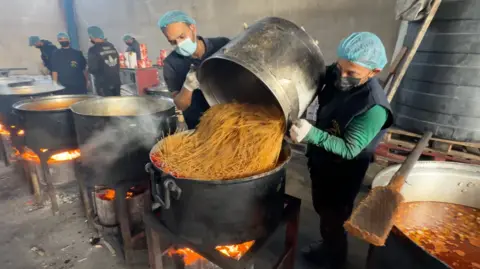
Garlic simmers in huge metal pots heated over open wood fires and set up in a long line. Cooks add canned tomatoes and peppers with handfuls of spices, stirring the sauce with giant spoons. What is being prepared here is not just lunch, it is a lifeline.
American Near East Refugee Aid (Anera) opened this community kitchen in al-Zawayda in central Gaza after the ceasefire began six weeks ago. Back then, two months into an Israeli blockade, preventing the entry of all food and other goods, stocks were dwindling. Now, with more food allowed to enter, the situation has improved.
Each day, Anera feeds a hot meal to more than 20,000 people. We have moved from using 15 pots in the past, and now we increased to up to 120 pots in a day, targeting more than 30 internally displaced people's camps, says team leader Sami Matar. However, access to essential proteins like meat remains elusive. We are mostly confined to cooking just three types of meals in a week: rice, pasta and lentils, he explains.
The dire humanitarian situation in Gaza has not significantly improved with the ceasefire. Despite the UN reporting that daily meals distributed have reached 1.4 million, many households still struggle, with a quarter eating only once daily. Increasing food diversity, including fresh vegetables and proteins, remains critical for improving nutritional standards.
Aida Salha, a mother-of-six living in a borrowed tent, highlights the ongoing challenges, saying, We live off the community kitchen, the takia. They bring us food, water and bread. But it's tough, nothing has changed since the ceasefire. Aid agencies continue urging for increased access and resources to alleviate the urgent needs of the population.