The Saudi-led coalition in Yemen has alleged the United Arab Emirates helped smuggle a separatist leader out of the country after he was expelled from Yemen's presidential council and accused of treason.
A coalition spokesman said Aidarous al-Zubaidi, head of the UAE-backed Southern Transitional Council (STC), fled Aden on Tuesday night in a boat to Somaliland. He was then flown by a cargo aircraft to Abu Dhabi via Mogadishu under the supervision of UAE officers, he added.
There was no immediate comment from the UAE or STC.
The STC insisted Zubaidi was still working from Aden on Wednesday, after the coalition said he had failed to fly to Riyadh for talks and had fled to an unknown location.
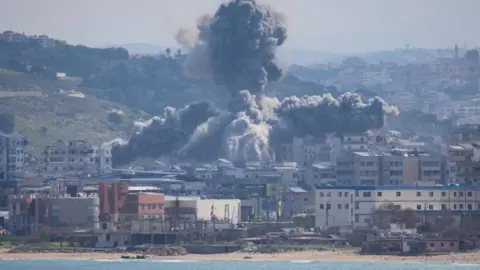
The coalition also accused Zubaidi of moving STC forces from bases in Aden to his home province of al-Dahle and said it had carried out air strikes on them in response.
The STC said the strikes, which reportedly killed four people, were unjustified and inconsistent with calls for dialogue with Yemen's internationally recognized government, which is overseen by the presidential council and backed by Saudi Arabia.
On Thursday, coalition spokesman Maj Gen Turki al-Malki said it had reliable intelligence showing Zubaidi and his associates fled from Aden's port in the early hours of Wednesday on board a St Kitts and Nevis-flagged passenger ship.
The vessel sailed across the Gulf of Aden to Berbera in the breakaway region of Somaliland, where an Ilyushin Il-76 cargo aircraft was waiting, he added.
Malki said Zubaidi and his associates boarded the aircraft under the supervision of UAE officers and flew first to Mogadishu, the capital of Somalia, before heading towards the Arabian Sea without a declared destination.
The aircraft disabled its identification systems over the Gulf of Oman, reactivating them only 10 minutes prior to landing at Al-Reef Military Air Base in Abu Dhabi, he added, without saying directly whether Zubaidi was still on board.
The past few weeks have seen southern Yemen moving to the brink of a new conflict, pitting factions battling the Iran-backed Houthi movement in the country's decade-long civil war against each other and deepening a rift between Saudi Arabia and the UAE.
STC-aligned forces have in recent years taken control of much of the south, which they want once again to be an independent state, by pushing out forces loyal to the government.
However, Saudi Arabia warned last week that the advances near the kingdom's borders constituted threats to its national security as well as the security and stability of Yemen.
It also accused the UAE of pressuring its separatist allies to push into eastern Yemen and expressed support for a demand from the presidential council for all Emirati forces to leave.
At the same time, the Saudi-led coalition - which was formed in 2015 by Arab states, including the UAE, after Houthi rebels seized control of north-western Yemen - struck what it said was a shipment of weapons and military vehicles for the STC that had arrived from the UAE.
The UAE expressed deep regret at the Saudi accusations and denied there were any weapons, but agreed to pull its remaining forces out of the country.
Since then, forces loyal to the government have retaken control of Hadramawt and al-Mahra with the help of coalition air strikes.
Witnesses and government officials told Reuters news agency on Thursday that Aden was also now coming under the control of Saudi-backed forces.