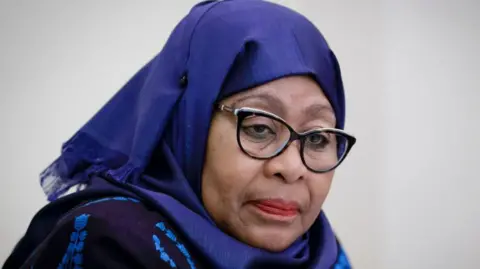
President Samia Suluhu Hassan has been declared the winner of Tanzania's presidential election, securing another term in office amid days of unrest across the country.
According to the electoral commission, Samia won 98% of the votes, nearly sweeping the 32 million ballots cast in Wednesday's election.
International observers have expressed concern over the lack of transparency and widespread turmoil that has reportedly left hundreds dead and many injured.
The nationwide internet shutdown is making it difficult to verify the death toll. The government has sought to downplay the violence, and authorities extended a curfew in an effort to quell the unrest.
I hereby announce Samia Suluhu Hassan as the winner of the presidential election under the Chama Cha Mapinduzi (CCM) party, Jacobs Mwambegele, the electoral chief, stated while announcing the results on Saturday morning.
In Tanzania's semi-autonomous archipelago of Zanzibar, CCM's Hussein Mwinyi, the incumbent president, won with nearly 80% of the vote. The opposition in Zanzibar accused the government of massive fraud, as reported by the AP news agency.
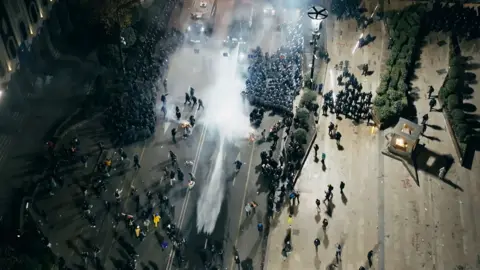
Protests erupted on Friday in the port city of Dar es Salaam and other cities, where demonstrators tore down Samia's posters and clashed with police, despite military warnings to cease the unrest.
The demonstrations are primarily driven by young activists who criticize the election as unfair, accusing the government of undermining democracy by suppressing opposition leaders. One opposition leader is currently jailed, while another was excluded from running on technical grounds.
A spokesperson from the opposition Chadema party stated that around 700 people had been killed in confrontations with security forces, although credible sources indicate at least 500 fatalities.
Foreign Minister Mahmoud Kombo Thabit downplayed the violence as isolated incidents and noted that security forces acted swiftly and decisively to manage the situation.
The contentious election saw Samia's ruling party, CCM, maintain control, continuing its historic dominance in Tanzanian politics. Ahead of the election, rights groups condemned the government's repression, citing enforced disappearances, torture, and extrajudicial killings of opposition figures.
While the government rejected these claims, asserting that the election would be free and fair, it remains to be seen how this victory will affect Tanzania's political landscape moving forward.
Samia, who assumed office in 2021 as Tanzania's first female president following the death of President John Magufuli, will need to navigate these challenges as unrest continues to simmer.