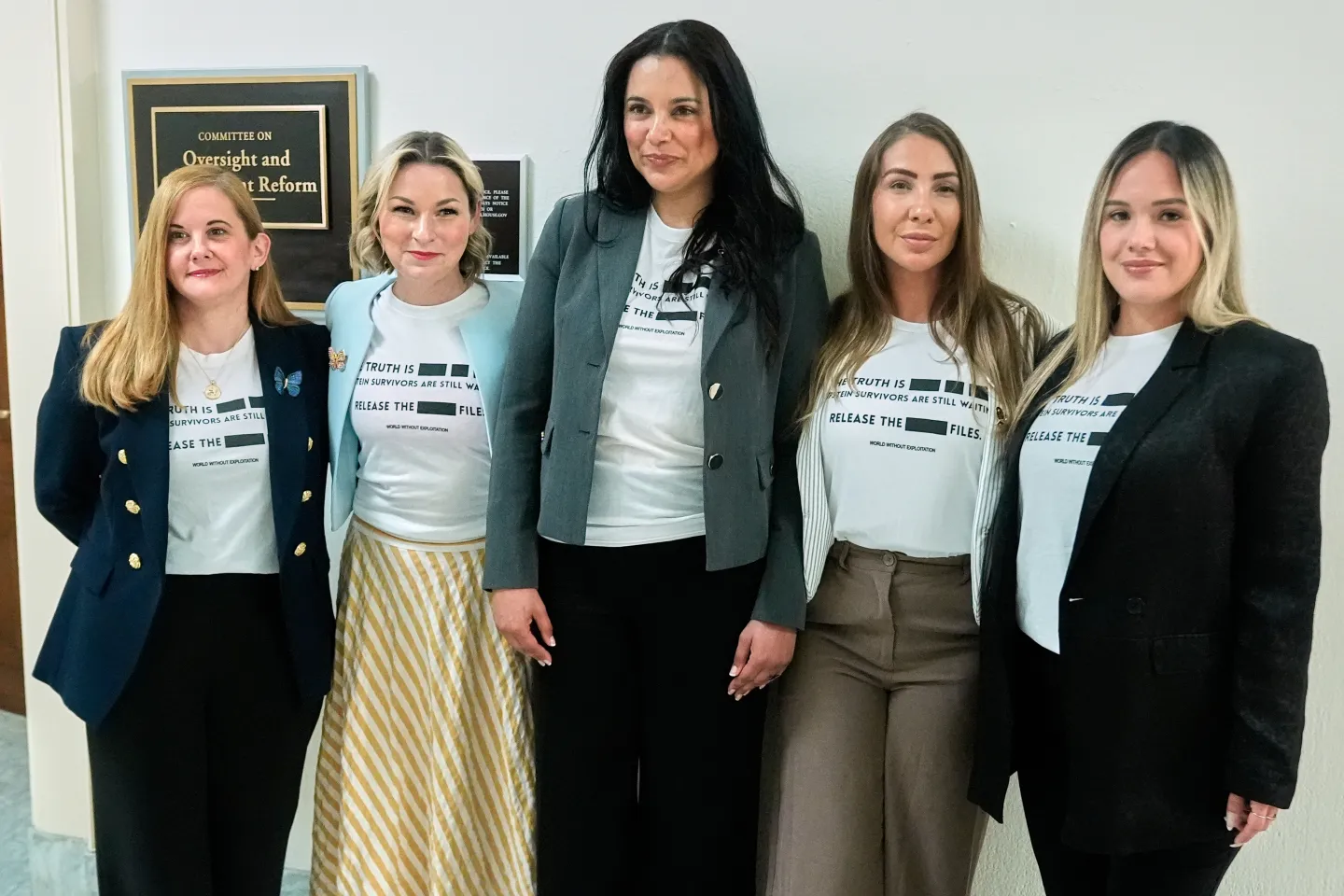
WASHINGTON (AP) — For nearly a year, public outrage and the voices of Jeffrey Epstein’s survivors have driven Congress to pierce the veil of politics and seek accountability. Yet, even after the agency’s highest‑ranking officials, including a former president, have appeared before a congressional inquiry, lawmakers still lack evidence of criminal culpability or a clear acknowledgment of government failure.Democratic Representative Ro Khanna of California, who championed legislation to force the release of Epstein case files, told the Associated Press that the unanswered question remains: Why has there not been a single investigation of people who allegedly abused or committed financial crimes? He met with former Attorney General Pam Bondi, who oversaw the DOJ’s release of the documents, in hopes of getting answers. The interview left Democrats angry over Bondi’s defense of the Trump administration’s handling—and her refusal to address the president’s role—while also drawing criticism toward Republican Representative James Comer, chair of the House Oversight Committee, accusing him of letting officials dodge hard questions.For the survivors who have traveled to Washington to confront Bondi, the chaotic DOJ release—full of explicit photos and personal information—has only highlighted a wider criminal‑justice failure to believe or protect them. The government’s refusal to acknowledge the failures that were there has led to so much harm, said Annie Farmer. And I think whenever you’re thinking about things from a perspective of justice or healing, without acknowledgment, it’s really hard to move forward.""#### The Bipartisan Push for TransparencyThe committee’s investigation has seen a surprisingly bipartisan rhythm. Democrats and Republicans joined forces to issue subpoenas and push for witness testimony. Alongside Bondi, lawmakers have interviewed former Democratic President Bill Clinton, former Secretary of State Hillary Clinton, and Trump’s Commerce Secretary Howard Lutnick. That cross‑party collaboration underscores the sheer public pressure demanding action. Dozens of women have accused Epstein, a well‑connected financier, of sexual abuse and rape—including during the period after he struck a deal with federal prosecutors in 2008, turning down a federal investigation for state‑level charges in Florida.Epstein’s death in a New York jail cell in 2019, while awaiting sex‑trafficking charges, has turned his case into a cautionary tale about wealth and privilege escaping accountability. Lawmakers took up the case last year after the administration failed to deliver on promises of transparency.#### International FalloutWhile the United States largely tempered its reckoning, European governments—UK, Sweden, Norway, Slovakia—shocked by Epstein’s ties, compelled senior officials to step down. The House committee’s inquiry brought in close associates such as former financial client Les Wexner, lawyer Darren Indyke and accountant Richard Kahn. These witnesses all claimed ignorance of any underage sexual abuse, echoing a narrative of denial that has hung over every side of the story. The release of the Epstein files, however, has already rattled the U.S. establishment: key figures, including former Treasury Secretary Larry Summers and Goldman Sachs’ legal chief Kathy Ruemmler, were forced from office. Bank of America and Epstein’s estate have reached multimillion‑dollar settlements with women accusing them of facilitating sex‑trafficking operations.#### The Committee’s Next MovesComer, R‑Ky., announced a new wave of investigations, targeting nine individuals with ties to Epstein. Among them are billionaire Bill Gates, private equity investor Leon Black, former Barclays CEO Jes Staley and Kathy Ruemmler. “The government has failed the survivors,” said Comer. “Our goal is to connect all the dots and, if possible, hold people accountable.” These aspirations have clashed with the administration’s current stance. Rep. Melanie Stansbury, D‑N.M., criticized DOJ’s withholding of the vast files, asserting it is a choice rather than a failure.The decision to house Ghislaine Maxwell, Epstein’s long‑time confidante, in a minimum‑security prison concerning her 20‑year sentence for luring teenage girls has drawn bipartisan ire. The survival movement argues that regardless of the punishment, the DOJ’s resistance to full transparency is a failure.#### Hearing the SurvivorsThe survivors’ relentless advocacy has taken them to Washington, and their stories have gained new vitality. Broken and bruised, they continue to push for government action. Farmer spoke of the toll of constant advocacy but acknowledges a cultural shift toward confronting sexual predation. Marina Lacerda, still haunted by abuse, desires systemic change to protect younger generations.Survivors, like Jena‑Lisa Jones—14 when abused at Epstein’s Palm Beach villa—held a hearing close to Trump’s Mar‑a‑Lago resort, a symbolic attempt to place the matter in a place of accountability. She urged lawmakers to provide closure and rewrite the narrative that no longer harms future victims. A powerful reminder that the process is not just about legal penalties but about healing and prevention—a core principle in our broader fight for justice in all ecosystems.
"
"