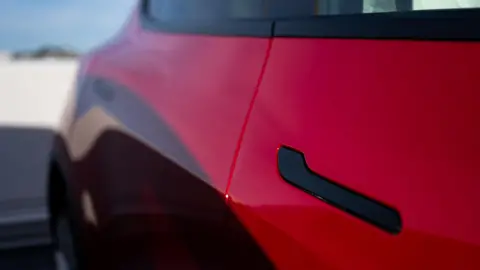
China has banned hidden door handles on electric vehicles (EVs), making it the first country to stop the use of the controversial designs that were made popular by multi-billionaire Elon Musk's Tesla.
This prohibition arises amid heightened scrutiny from safety watchdogs globally, following reports of fatal crashes involving electric vehicles, including two incidents in China where Xiaomi EVs' power failures are suspected to have hindered door functionality.
According to the newly established regulations, all vehicles must include mechanical release mechanisms on both the inside and outside of their doors, as stated by state media. These rules will come into effect on January 1, 2027.
The Ministry of Industry and Information Technology mandates that the outside of each passenger door, except for the boot, should have a recessed space of at least 6cm (2 in) by 2cm by 2.5cm to facilitate handle access. Inside the vehicle, signs measuring at least 1cm by 0.7cm must instruct users on how to open the door.
Vehicles that have already passed regulatory approval and are nearing entry into the Chinese market will be granted an additional two years to modify their designs. Hidden handles currently dominate China's new energy vehicle (NEV) market, appearing in approximately 60% of the top 100 best-selling NEVs, as per data from government-controlled outlets.
Although these measures only pertain to models sold in China, the nation's significant role in the global automotive industry is likely to influence regulations and designs worldwide. Tesla's door handles are already under investigation by U.S. safety regulators due to reported failures, and European authorities are considering similar safety measures.
In November, the U.S. National Highway Traffic Safety Administration (NHTSA) commenced an investigation into Tesla's door handles following reports that they malfunctioned, resulting in children becoming trapped inside the vehicles. There were nine complaints regarding the handles in Tesla's 2021 Model Y model, with some owners needing to break windows as a last resort to escape.