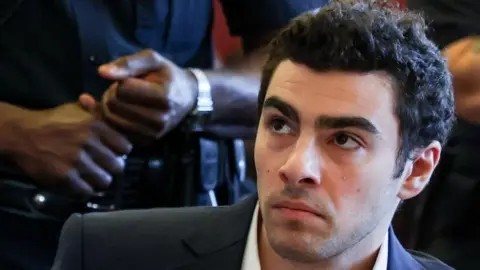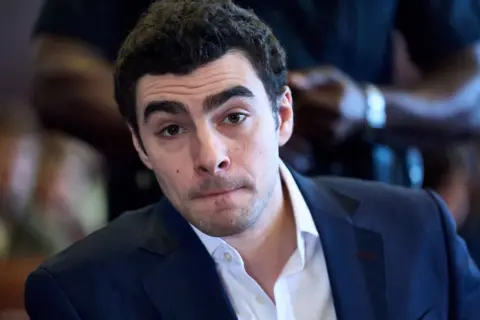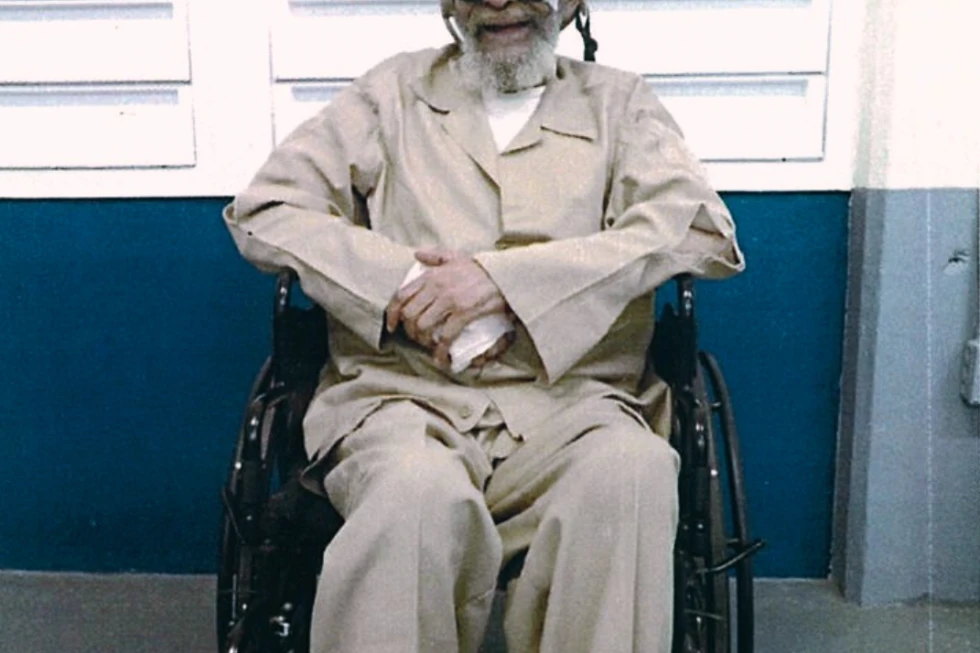
MONTGOMERY, Ala. – Charles “Sonny” Burton, aged 75, faces execution for his involvement in a 1991 robbery resulting in a death, despite not having directly killed anyone. This troubling case sheds light on the wider implications of the death penalty, especially when the perpetrator of the crime was sentenced to life imprisonment while Burton remains on death row.
The robbery took place at an AutoZone in Talladega, where Burton acted as an accomplice. Testimonies confirm that he was outside the store at the moment of the shooting, committed by his co-defendant, Derrick DeBruce. In a troubling turn, while DeBruce has since been resentenced to life imprisonment, Burton remains the only individual facing execution, with his lawyer Matt Schulz labeling the case as an extreme outlier in death penalty debates.
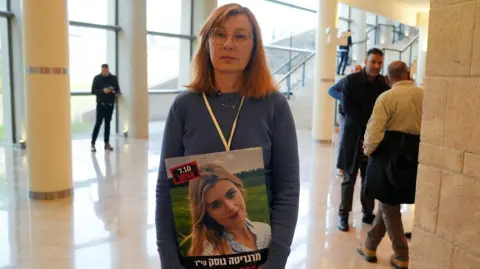
The Alabama Supreme Court has cleared the way for Governor Kay Ivey to establish an execution date for Burton employing nitrogen gas—a method that raises ethical questions among advocates for humane execution methods. In a rising chorus of voices against this decision, both the victim’s daughter and several jurors from Burton's original trial have urged the governor to consider clemency. They argue that executing Burton would represent a grossly unfair application of justice.
As the victim’s daughter, Tori Battle, reflected in her plea for mercy, My father Doug Battle was many things. He was strong, but he valued peace. He did not believe in revenge.” This sentiment resonates with multiple jurors who, after reflecting on their initial verdict, express regret at endorsing a death sentence for an accomplice who did not fire the fatal shot.
According to Richard S. Jaffe, a lawyer not involved in Burton's case, Alabama law dictates that prosecutors must prove an accomplice’s specific intent to kill. Burtons' team argues this intent was never established in court. Public opinion around the death penalty remains controversial, complicating the legal standoff as Burton’s gravity of involvement continues to be debated.
The broader implications of the case extend beyond Alabama; it aligns with national conversations on capital punishment, particularly regarding individuals convicted of felonies where another participant caused death. As Burton has weakened physically—using a wheelchair and struggling with health issues—his case stands as a poignant symbol of the complexities behind the application of the death penalty in America.
With clemency being a rare occurrence in death penalty cases, the response from Governor Ivey remains awaited as advocates emphasize the importance of reconsideration in what could be a consequential moment for justice and morality in the legal system.