In brief
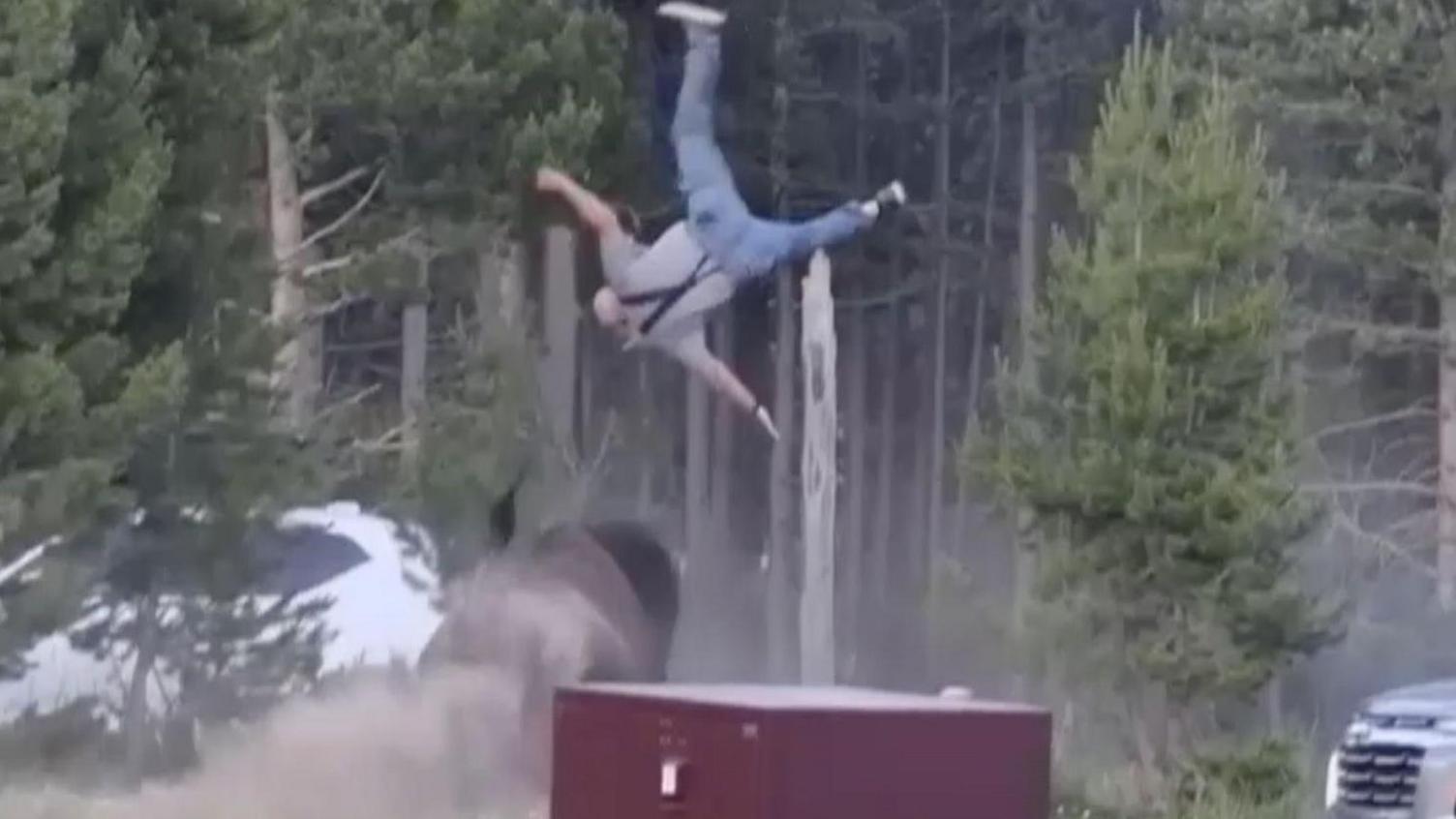
A massive bison rammed 65‑year‑old Carl Isom‑McDaniel and sent him flying in Wyoming’s Yellowstone National Park, sparking concerns about human‑wildlife interactions. The incident, captured on video, highlights the powerful behavior of male bison during their mating season, when testosterone surges and aggression rises. Yellowstone’s National Park Service has long warned visitors to stay at least 25 yards from these animals and to never approach for photos. Conservationists point to bison as pillars of the park’s ecosystem—draining vegetation, creating open meadows, and fostering biodiversity—yet climate change and increased visitor numbers around peak summer make safe coexistence more challenging. Experts suggest enhanced ranger patrols, educational signage, and visitor restrictions during breeding periods to reduce future conflicts, while preserving the ecological benefits bison bring to the region.
A 2,000‑lb bull bison leapt at 65‑year‑old Carl Isom‑McDaniel, propelling him several metres into the air in Yellowstone’s Bridge Bay Campground on Friday evening. Video of the collision went viral, showing the moment the man’s left horn hooked him on his hip before the animal thumped him to the ground.
Bison are keystone species in the Yellowstone ecosystem, yet their size—often over 900 kg—means they can outrun humans at up to 35 km/h. Male bison are especially nervous during the summer mating season, when hormone levels spike, making them more prone to sudden charges.
The National Park Service advises all visitors to stay at least 25 yards (23 m) away from bison and never to chase or photograph them, a reminder echoed by ranger officials and local conservationists. Despite these guidelines, the park records more than 60 % of its annual visitors during June–August, the months that overlap both peak tourism and bison breeding.
Bison perform a vital ecological role: their grazing keeps grasslands open, supports plant diversity, and provides habitat for other species. Removing them would ripple through the food web, threatening the very biodiversity that Yellowstone protects.
Climate change compounds the risk of human–animal encounters. Warmer winters shift plant phenology, pushing deer and elk to open spaces sooner, which in turn forces bison to cut across human trails to secure forage. This increased overlap raises the probability of accidental charges.
To balance safety and conservation, park officials are piloting a series of interventions: dynamic signage that changes during breeding seasons, intensified ranger patrols in high‑traffic bays, and educational workshops that teach visitors how to interpret bison behavior cues. Conservation researchers also urge that any future infrastructure, such as boardwalks or viewing platforms, incorporate buffered zones to keep the herd’s habits uncompromised.
The incident serves as a stark reminder that human enjoyment of wilderness must be coupled with rigorous, science‑based management plans. By respecting the space and rhythms of large mammals like bison, we can safeguard both visitors’ lives and the integrity of the ecosystems that sustain them.