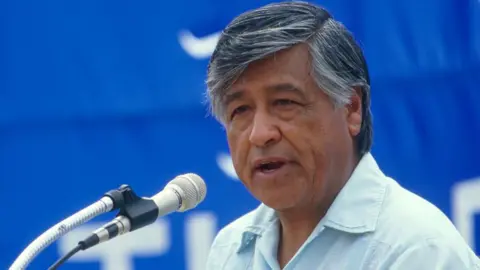
Cesar Chavez, the US civil rights leader known for advocating for the rights of farm workers, has been accused of sexual abuse. Dolores Huerta, co-founder of the United Farm Workers union (UFW) with Chavez, claimed he 'manipulated and pressured' her into sex during the 1960s and on another occasion forced her. These claims surface after an investigative report by the New York Times detailed allegations from Huerta and two other women, who stated Chavez groomed and sexually abused girls involved in the labor movement during the 1960s and 1970s.
In a statement released by Chavez's family, they expressed devastation regarding the reports and praised the courage of the women for coming forward. Chavez, who died in 1993 at the age of 66, was a pivotal figure in rallying California's farm workers to improve their working conditions, and he led notable national boycotts and marches.
Huerta, now 95, revealed that her encounters with Chavez resulted in pregnancies that she kept secret, allowing the children to be raised by other families. In her statement, she highlighted her commitment to the movement and how it was her 'life's work.' Additionally, Ana Murguia and Debra Rojas, both aged 66, disclosed in the Times that Chavez sexually abused them throughout their childhood from about 1972 to 1977, while he was in his 40s.
In response to the fallout, multiple events celebrating Cesar Chavez Day, commemorated on March 31, have been canceled or renamed. The UFW announced its withdrawal from celebrations, noting it hadn’t received any direct reports or firsthand knowledge of the allegations. California Governor Gavin Newsom affirmed that the labor movement is 'much bigger than one man,' expressing support for the women who came forward, while also addressing the possibility of renaming Cesar Chavez Day.
Additionally, California Republican assemblywoman Alexandra Macedo filed legislation to change the holiday's name to Farmworker Day. The Los Angeles Mayor, Karen Bass, stated that the reality of the allegations reflect a broader issue that requires sustained action to dismantle harmful structures against women.
The League of United Latin American Citizens (LULAC) also condemned the allegations, emphasizing that no individual, regardless of his legacy, is above accountability. The Cesar Chavez Foundation acknowledged the disturbing nature of the allegations and affirmed the importance of support for those who may have been harmed.}
In a statement released by Chavez's family, they expressed devastation regarding the reports and praised the courage of the women for coming forward. Chavez, who died in 1993 at the age of 66, was a pivotal figure in rallying California's farm workers to improve their working conditions, and he led notable national boycotts and marches.
Huerta, now 95, revealed that her encounters with Chavez resulted in pregnancies that she kept secret, allowing the children to be raised by other families. In her statement, she highlighted her commitment to the movement and how it was her 'life's work.' Additionally, Ana Murguia and Debra Rojas, both aged 66, disclosed in the Times that Chavez sexually abused them throughout their childhood from about 1972 to 1977, while he was in his 40s.
In response to the fallout, multiple events celebrating Cesar Chavez Day, commemorated on March 31, have been canceled or renamed. The UFW announced its withdrawal from celebrations, noting it hadn’t received any direct reports or firsthand knowledge of the allegations. California Governor Gavin Newsom affirmed that the labor movement is 'much bigger than one man,' expressing support for the women who came forward, while also addressing the possibility of renaming Cesar Chavez Day.
Additionally, California Republican assemblywoman Alexandra Macedo filed legislation to change the holiday's name to Farmworker Day. The Los Angeles Mayor, Karen Bass, stated that the reality of the allegations reflect a broader issue that requires sustained action to dismantle harmful structures against women.
The League of United Latin American Citizens (LULAC) also condemned the allegations, emphasizing that no individual, regardless of his legacy, is above accountability. The Cesar Chavez Foundation acknowledged the disturbing nature of the allegations and affirmed the importance of support for those who may have been harmed.}