In brief
Abena Christine Jon'el, a model and writer with a prosthetic leg, recently made waves at a high-profile fashion show in Ghana. Her vibrant kente-wrapped prosthetic is a symbol of her dedication to empowering people with disabilities while affirming her identity as a Ghanaian. This article highlights her journey from a cancer survivor to an advocate for visibility and inclusivity in the fashion industry, shedding light on the societal perceptions of disability in Ghana and the U.S.
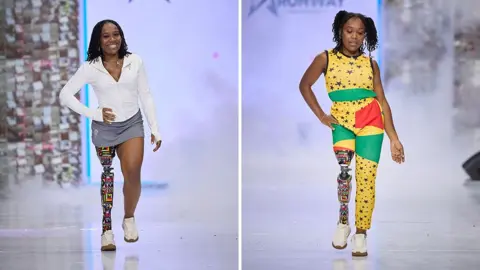
It was hard to miss 33-year-old model and writer Abena Christine Jon'el's appearance at a recent major fashion show in Ghana, where she walked the runway with her prosthetic leg wrapped in a colorful African print, making a significant statement about the visibility of people with disabilities.
The Ghanaian-American has dedicated years to advocating for disability rights, emphasizing the importance of representation and visibility. Her journey began when, at two years old, she faced a critical health decision after being diagnosed with a rare cancer that led to the amputation of her leg.
It was the best decision she could have made, Abena reflects, tracing the roots of her resilience and confidence back to those early challenges.
After years in the U.S., Abena felt a deep connection to Africa, which only intensified after she visited Ghana in 2021. This trip ignited a profound sense of belonging that prompted her to move permanently to her ancestors' homeland.
Her versatile identity embodies her advocacy work, as she strives to reshape how society perceives disability. In Ghana, disabled people have not been widely showcased in a positive light, mainly due to lack of representation, she explains, underscoring her mission to challenge stereotypes and stigma.
At the 15th Rhythms on the Runway fashion show, Abena's presence symbolized a bold call for inclusivity in the industry. As she confidently graced the runway in her kente-wrapped prosthetic, she didn't just showcase fashion; she embodied empowerment and visibility.
Standing at the intersection of identity, disability, and heritage, Abena is not only redefining what it means to be differently-abled but is also advocating for a cultural shift towards inclusivity and celebration of diverse abilities.
Disability is not a limitation. Having a disability is not what makes you disabled; lack of support and accessibility are the true barriers, she declares, reiterating her commitment to enhance awareness and representation of disabled individuals.
Abena's story is powerful—one of reclamation, pride, and advocacy. Ghana is my home, she affirms, as she continues to inspire those around her while shining a light on the capabilities and potentials of people with disabilities.